Yu Kurosaki  |  SKU: KS-SACO-BU170

Kurosaki Sasame COSP Bunka 170mm

Sale price $440.00 Regular price $517.00

Pickup in Australia only

In Stock Now

Availability

Goes well with

Detailed Specifications
Line Kurosaki Sasame COSP Tsuchime
Profile Bunka / K-tip santoku
Bevel Type Double Bevel
Weight 155 g | 5.5 oz
Edge Length 173 mm | 6 13/16″
Heel Height 48 mm | 1 57/64″
Width @ Heel 3.1 mm | 1/8″
Width @ Mid 1.9 mm | 5/64″
Width @ 1cm from Tip 1.0 mm | 3/64″
Steel COSP (Cobalt Special) | Stainless
Blade Construction Sanmai - Stainless Clad
Maker's hardening hardness 60 HRC or more
Surface Finish Tsuchime
Handle Octagonal Ebony
Region Takefu
Best for
  • Pro chefs
  • Enthusiasts

World-wide shipping via DHL Express, 3 to 6 days (not available in the UK).


Sasame(笹目, Bamboo Pattern) a line crafted by Yu Kurosaki that is built a little bit different. With the Gekko, Senko and Kokusen using stamping method to produce the blank, the knives from the Sasame are all forged, which can be identified by its thick Machi(neck) and distal taper in the spine. This adds rigidity to the blade and made it feel very confident and precise to use, and the stainless nature will make this a line highly suitable for professionals in busy kitchen.

The combination of forging and stainless steel may seems simple, but it is something worth noting. When steel is heated up for forging, the stainless steel will be harder and deform less compare to carbon steel, there is also a smaller temperature zone you can forge them at. For these reasons, you would rarely see forged stainless steel knives.

When forging, many blacksmiths would like to thin down the blade but kept the neck and tang thick, which increases the rigidity of the blade against bending and torsion and gives some weight to the knife. As the result, the knife will feel very responsive and follow your desired cutting trajectory especially when cutting hard objects, and thin, high performance blade(that Kurosaki san and other Echizen smiths are known for) won't feel gossamery.

The Sasame itself inherent some of the features that we love about Kurosaki san's knives: great finish, thin and aggressive bevel geometry and a bamboo leaf pattern that proudly display its identity. The nuance is, the bevel of Sasame is not a concave grind, but a convex instead, which does improve the food release and smoothness of the cut. Pairing with the highly polished bevel surface, Sasame is the best gliding knife I've every tested from Kurosaki.

Using the Cobalt Special as the core steel, the Sasame wouldn't be as pricy as the R2/SG2 Shizuku/Fujin that are also forged, it is a successor to the previous COSP line Raijin, and is a great option for professionals and knife enthusiasts.

Pros Cons
  • Great for professionals
  • Excellent performance
  • Thin behind the edge
  • High budget
  • A little bit brittle
Care Instruction
  1. Don't cut hard things! Japanese knives are brittle so bone hacking is a NO NO!
  2. Wash with neutral detergent after use, and wipe dry;
  3. Please don't wash knife with dishwasher, it will damage the wood handle;
  4. Be careful not to leave the knife close to a heat source for a long time;
  5. It is a lot more dangerous to cut with a blunt knife than a sharp knife!
  6. It is best to sharpen a Japanese knife regularly on a waterstone.

Yu Kurosaki

Yu Kurosaki, Echizen smith

Yu Kurosaki (黒崎優) is an Echizen smith who has run his own workshop, Kurosaki Uchihamono (黒﨑打刃物), since founding it in 2014, and who was certified as a traditional craftsman in 2019.

His site describes his knives as Echizen forged knives made one by one by a craftsman's hand, with time and care.

Read more

Before going out on his own, Yu Kurosaki spent twelve years at Kanehiro Uchihamono, from 2002 to 2014. He trained under Hiroshi Kato and Takeshi Saji. The Takefu Knife Village profile lists his work as double-bevel forged knives and custom knives.

In a 2022 interview with the magazine NIHONMONO he describes his knives in his own words as thin, sharp and tough. The same interview credits him with five original designs: Shizuku, Fujin, Raijin, Juhyo and Senko.

We carry a lot of his work, and we list two of those designs: the Raijin in VG10W and the Shizuku in SG2.

“An Echizen smith with his own workshop since 2014.”

Est. 2014 | 平成26年
Known for Raijin and Shizuku knives, forged by hand
Website kurosakiknives.jp Instagram @kurosakiknives Read more about Yu Kurosaki

Yu Kurosaki · Takefu

Knife details

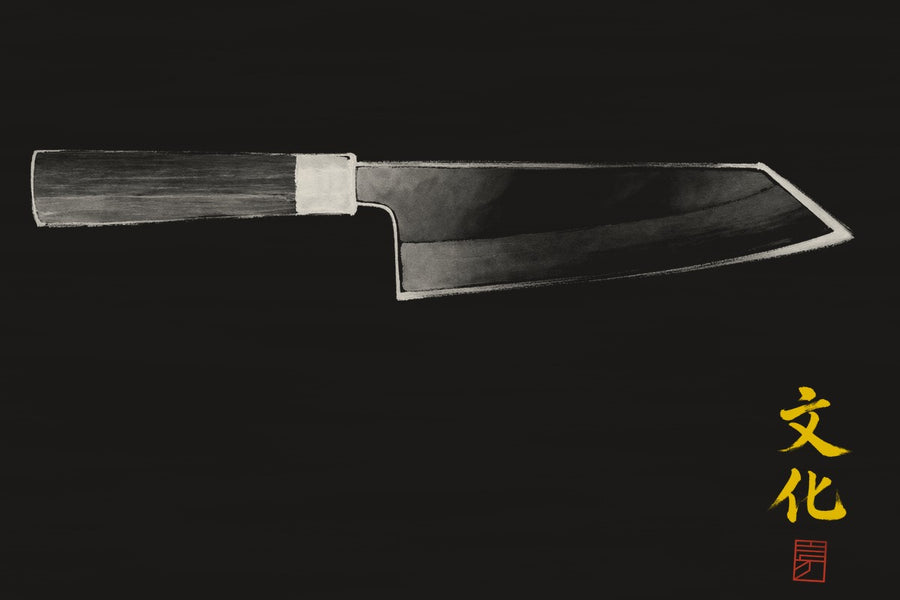
Bunka — knife profile
Profile

Bunka

文化

K-tip santoku · Double bevel

A compact all-rounder like a santoku; a Sakai maker says its angled K-tip suits fine work.

Read more
Steel properties
  1. Hardness Good
  2. Edge retention Good
  3. Toughness Good
  4. Rust resistance High
  5. Ease of sharpening Good
  6. Sharpness Good
Our ratings, inferred from published lab tests and composition.

Our edge-retention grade is a kitchen rating. It weighs the hardness each steel is sold at, which keeps a thin edge from rolling, twice as heavily as lab wear tests, and the final grade is our judgment from selling and sharpening these knives for over a decade. Lab card-cutting tests measure abrasive wear only, so they can rank carbon steels lower. Tap ? for the lab figure.

Steel

COSP (Cobalt Special)

コバルトスペシャル鋼

Stainless · Takefu Special Steel

Takefu stainless with 2.50% cobalt; Takefu says the cobalt helps the edge last.

Read more
CladdingCoreClad line
Construction

Sanmai - Stainless Clad

三枚

3 layers · stainless clad

Hard core between two stainless layers, bare only at the edge; the cladding resists rust.

Read more
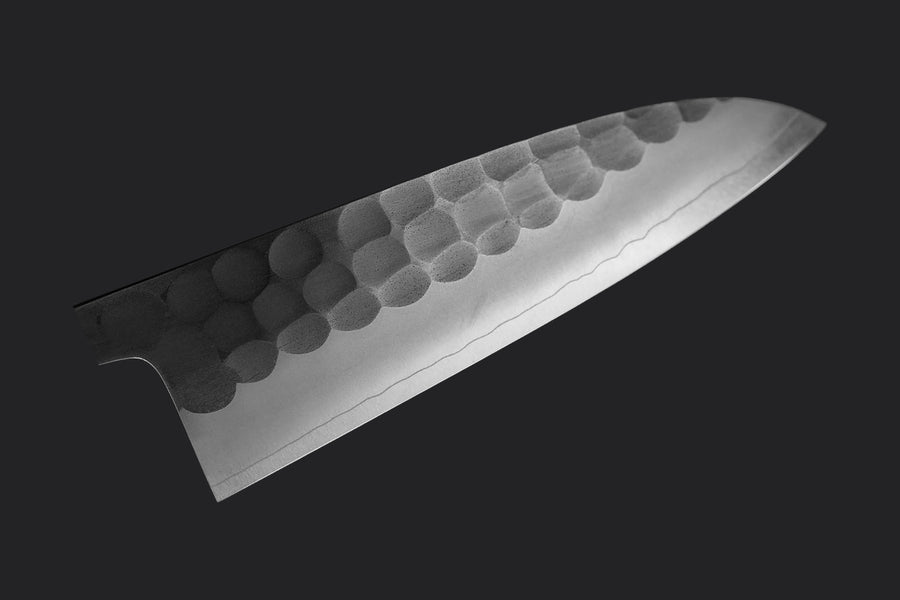
Tsuchime — blade surface finish
Finish

Tsuchime

槌目

Hammered surface

Hammer marks across the upper blade. The dimples may help food release.

Read more
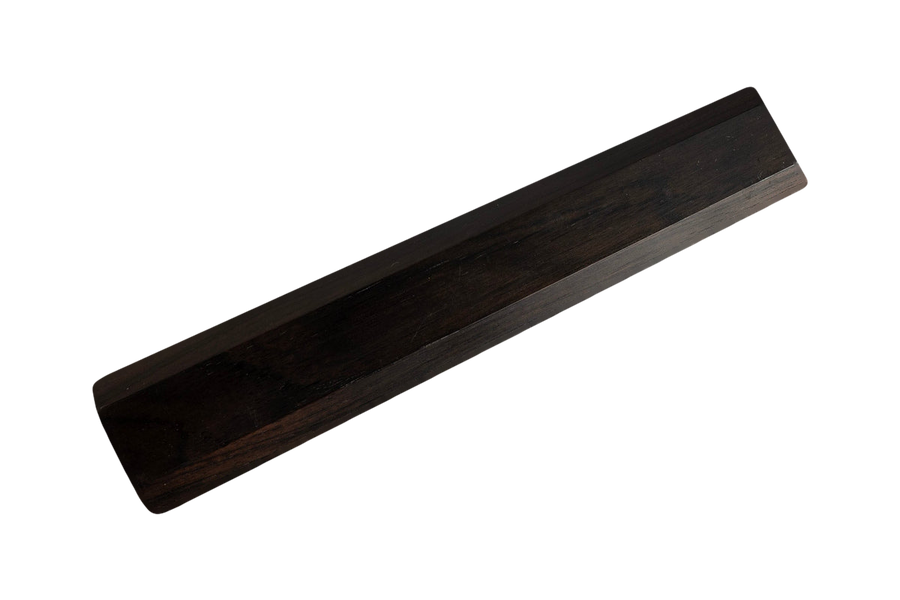
Octagonal Ebony handle
Handle

Octagonal Ebony

Octagonal WA

Dense, dark ebony in the eight-sided wa shape. The flats give a sure grip for either hand.

Frequently asked questions

Why is it called a bunka knife?

The bunka knife (文化包丁) takes its name from bunka, culture. A Sakai knife maker ties the name to Japan's modernisation, when Western culture and Japanese tradition merged, and says it stands for that new era and for the knife's wide range of uses.

The same maker says that as diets broadened to meat, fish and vegetables, an all-purpose knife was wanted, and the bunka took features from both Japanese and Western knives.

What is the difference between a bunka and a santoku?

The tip. One Japanese knife maker describes the bunka (文化包丁, kengata) as combining the good points of the gyuto and the nakiri with the tip cut at an angle, and the santoku as coming after it, by rounding that tip.

Both are all-purpose knives for the home; santoku (三徳) means three virtues, for the three foods it cuts: meat, fish and vegetables.

Bunka, nakiri or usuba: which knife is best for vegetables?

For everyday vegetable prep, a nakiri (菜切) is the simple choice. Tojiro describes it as Japan's own vegetable knife: a square, double-bevel blade, so it cuts the same way in either hand.

A bunka (文化) is a home knife that Tojiro describes as combining the good points of the nakiri and the gyuto. Choose it if you want one knife for vegetables plus meat and fish, with an angled tip.

An usuba (薄刃) is a knife made for vegetable preparation in Japanese cooking. It is single bevel, so it is made for one hand, and Tojiro lists its jobs as peeling and hollowing at the heel, and katsuramuki, fine garnish cuts and rounding off cut edges along the middle of the edge. Choose it if you want to learn those techniques.

What is Cobalt Special (CoSP) steel?

Cobalt Special (CoSP) is Takefu's stainless blade steel for cutlery: Takefu's page describes it as super high-grade and made by a special remelting process that gives a uniform composition and finely dispersed carbides.

Takefu's table gives 1.05% carbon, 16.00% chromium, 1.50% molybdenum, 0.25% vanadium, 0.25% tungsten and 2.50% cobalt, with a hardening hardness of HRC 60 or more. In Takefu's description, tungsten improves tempering resistance, molybdenum adds corrosion resistance, vanadium gives a finer microstructure, and cobalt strengthens the matrix and helps keep a long-lasting edge. Its 16.00% chromium is above the JSSA's 10.5% minimum for stainless, which the JSSA says strictly means rusts less; wash and dry the knife after use.

Is Yu Kurosaki a good Japanese knife maker?

Yes. We think his knives are worth buying if you want a thin, sharp knife that is also a piece of craft. Yu Kurosaki, a smith in Echizen, Fukui, trained for twelve years at Kanehiro Uchihamono (カネ弘打刃物), set up his own workshop in 2014, and was certified as a traditional craftsman (伝統工芸士) in Echizen forged blades in 2019. In a 2022 interview with the magazine Nihonmono he described his knives as thin, sharp and tough.

What you pay for is the grind and the finish. His own designs include Senko, Fujin, Shizuku and Raijin, and he told NHK he set out to polish hammered (tsuchime) knives to a lustre, so they look like jewellery. James has used his own Kurosaki gyuto for everything from julienne and mincing to breaking down poultry and filleting fish, and it is still his go-to knife.

One thing to weigh: an edge ground this thin can chip if you twist it in bone or use it on frozen food, so cut through the joints and leave frozen food to a heavier knife. We list his knives in SG2, VG XEOS and COSP stainless steels, and in Aogami Super carbon steel in his Kokusen line. The Yu Kurosaki maker page has his full story.

What is the difference between Kurosaki Senko, Fujin, Raijin and Shizuku?

All four are Yu Kurosaki's own designs. In a 2022 interview with the magazine Nihonmono he named his five original designs, Shizuku, Fujin, Raijin, Juhyo and Senko, and described his knives as thin, sharp and tough.

In our range the steel is in the product title: Senko and Fujin are made in SG2 and Raijin in VG10W. So pick the design you like first, then check the steel in its title.

Are Yu Kurosaki knives handmade?

Yes. Yu Kurosaki worked at Kanehiro Uchihamono from 2002 to 2014, then founded his own workshop, 黒﨑打刃物 (Kurosaki Uchihamono), in 2014, and he is certified as a traditional craftsman. The trade body's profile of him lists double-bevel forged knives and custom knives, and his own site says his Echizen forged knives are made one by one by a craftsman's hand.

The Kurosaki knives we stock, such as the Senko SG2, Fujin SG2, Raijin VG10W and Shizuku lines, carry his name in the title.

How can I tell sanmai, warikomi, damascus and honyaki apart?

Start with the line on the blade. On a clad knife, sanmai or warikomi, a hard steel core is joined to a softer cladding, and the join shows on the bevel. Tojiro says this is where the name kasumi (霞, haze) comes from: the hard steel takes a shine while the soft metal looks hazy.

A honyaki (本焼) is made of one steel. Before hardening the smith coats the parts that should stay softer with clay, so only the edge hardens fully, and the boundary can show as a hamon (刃文).

Damascus is a pattern made by forging many layers of different metals together and then bringing the pattern out with the finish. If it matters how a knife is built, ask before you buy. Our sanmai, warikomi and honyaki pages show each construction.