Drag to spin · pinch or scroll to zoom

Hatsukokoro  |  SKU: HATS_Chromax_NK165

Hatsukokoro Hayabusa Chromax Nakiri 165mm, Ebony Handle

Sale price $192.00 Regular price $225.00

Availability

Goes well with

Detailed Specifications
Line Hatsukokoro Chromax
Profile Nakiri / Japanese vegetable knife
Bevel Type Double Bevel
Weight 150 g | 5.3 oz
Edge Length 168 mm | 6 39/64″
Heel Height 47 mm | 1 27/32″
Width @ Heel 2.1 mm | 5/64″
Width @ Mid 2.0 mm | 5/64″
Width @ 1cm from Tip 2.0 mm | 5/64″
Steel Chromax | Semi-stainless
Blade Construction Sanmai - Stainless Clad
Maker's hardening hardness 61 HRC or more
Handle Octagonal Ebony
Region Hyogo
Best for
  • First-timers
  • Students
  • Pro chefs

World-wide shipping via DHL Express, 3 to 6 days (not available in the UK).


For cooks looking for a thin Japanese knife at an approachable price, the Chromax line from Hatsukokoro has plenty of appeal. Made in Seki, Japan, these double-bevel knives combine lightweight blades with a semi-stainless core, making them an interesting option for anyone who enjoys a keen edge but would prefer less reactivity than a traditional carbon steel knife.

Chromax sits between carbon and fully stainless steels in terms of care. It offers good edge retention and a sharpening response closer to carbon steel, while being more resistant to corrosion. The construction is sanmai, with a Chromax core sandwiched between stainless outer layers. Semi-stainless still means some care is required: the exposed core can develop a patina and may rust if left wet, so wiping during preparation and drying after washing should become part of the routine.

The emphasis here is on thin, agile geometry. This makes the line a sensible choice for everyday vegetable preparation and slicing boneless proteins, particularly for cooks who prefer a light blade over a heavier workhorse. The trade-off is that a fine edge needs considerate handling. Avoid bones, frozen ingredients and twisting the blade in a cut, and let the edge do the work rather than forcing it through.

The understated, softly hazy blade finish suits the line’s practical character. There’s no elaborate Damascus pattern competing for attention; the appeal is in the steel, geometry and accessible pricing. For home cooks moving beyond a basic kitchen knife, or professionals looking for an affordable addition to their kit, Hatsukokoro Chromax is well worth considering.

Pros Cons
  • Budget friendly
  • Ideal entry point to Japanese knives
  • Not the thinnest geometry
Care Instruction
  1. Don't cut hard things! Japanese knives are brittle so bone hacking is a NO NO!
  2. Wash with neutral detergent after use, and wipe dry;
  3. Please don't wash knife with dishwasher, it will damage the wood handle;
  4. Be careful not to leave the knife close to a heat source for a long time;
  5. It is a lot more dangerous to cut with a blunt knife than a sharp knife!
  6. It is best to sharpen a Japanese knife regularly on a waterstone.
  7. Semi-stainless steel won't rust easily but may still patina

Hatsukokoro

Hatsukokoro, a knife brand from Amagasaki

Hatsukokoro (初心) is a knife brand from Amagasaki, Hyogo, launched in 2019. It is a brand rather than a forge: it works with knife makers instead of forging itself.

The name comes from the proverb 初心忘るべからず, roughly never forget your beginner's mind. For the same characters the brand chose the gentler reading hatsukokoro over shoshin.

The brand's own catalogue names the place behind some of its lines, and the maker behind a few: Shinkiro comes from Fukushima, and Hayabusa HAP40, Saihyo and Sunaarashi from Seki City, while for others the maker or the place stays private. Some of our listing titles also carry the maker alongside the brand, such as Hatsukokoro x Yoshikane and the Hatsukokoro x Yoshihiro Yauji collaboration.

The Hatsukokoro lines we list include both carbon and stainless steels. Our listings include Hayabusa in SG2 and Aogami Super, Saihyo in SG2 and Ginrei in Ginsan. Carbon steel kurouchi lines include Aosagi, Aokitae, Kurokaze and Kurogane.

“A knife brand from Amagasaki that works with knife makers rather than forging.”

Est. 2019 | 令和元年
Known for Lines made with partner makers, from Seki City to Fukushima
Website handk.co Instagram @handk_official Read more about Hatsukokoro

Hatsukokoro · Hyogo

Knife details

Nakiri — knife profile
Profile

Nakiri

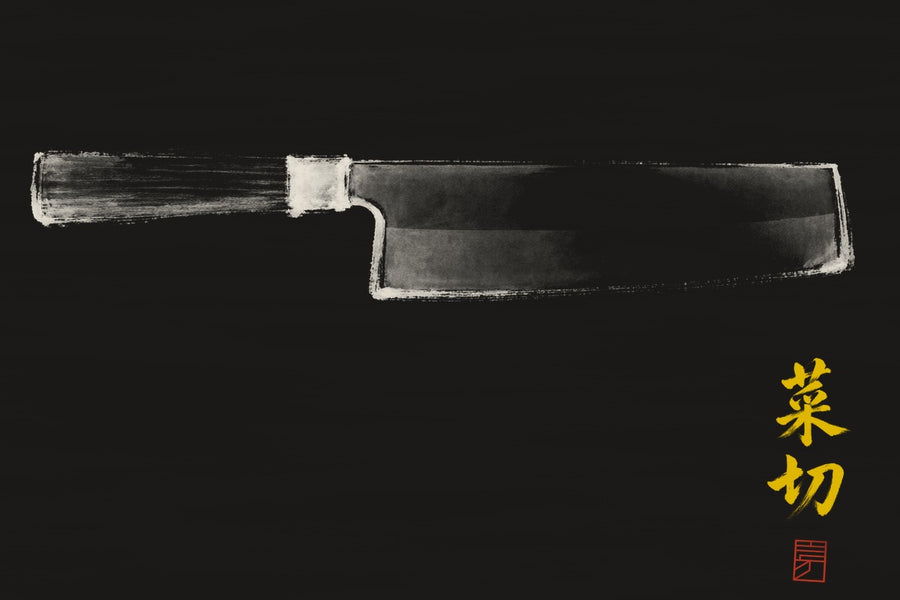
菜切

Japanese vegetable knife · Double bevel

Thin, wide vegetable knife with no point; Tojiro says its straight edge sits flat on the board.

Read more
Steel properties
  1. Hardness Very good
  2. Edge retention Good
  3. Toughness Good
  4. Rust resistance Fair
  5. Ease of sharpening Good
  6. Sharpness Good
Our ratings, inferred from published lab tests and composition.

Our edge-retention grade is a kitchen rating. It weighs the hardness each steel is sold at, which keeps a thin edge from rolling, twice as heavily as lab wear tests, and the final grade is our judgment from selling and sharpening these knives for over a decade. Lab card-cutting tests measure abrasive wear only, so they can rank carbon steels lower. Tap ? for the lab figure.

Steel

Chromax

クロマックス鋼

Semi-stainless · Takefu Special Steel

Takefu semi-stainless, conventionally melted, 1% carbon, 5% chromium, hardening hardness 61 HRC or more. Easy to sharpen and tough.

Read more
CladdingCoreClad line
Construction

Sanmai - Stainless Clad

三枚

3 layers · stainless clad

Hard core between two stainless layers, bare only at the edge; the cladding resists rust.

Read more
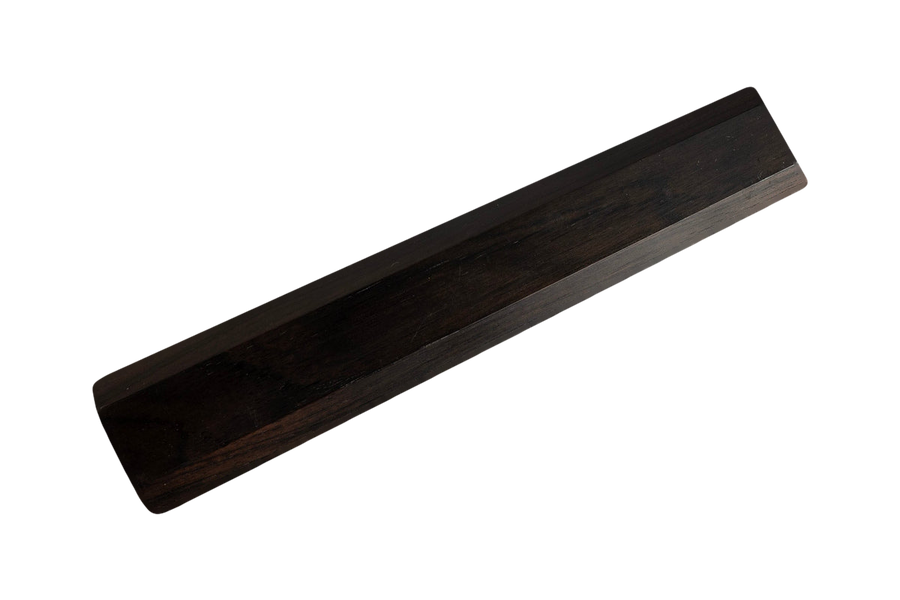
Octagonal Ebony handle
Handle

Octagonal Ebony

Octagonal WA

Dense, dark ebony in the eight-sided wa shape. The flats give a sure grip for either hand.

Frequently asked questions

Why won't my knife cut all the way through? The slices stay joined at the bottom.

Part of the edge never reaches the board, so the cut never finishes. At our counter we put it simply: there is not enough flat at the heel. A knife with a long curve is built for rock chopping, not for the Chinese or Eastern up-and-down chop.

A straight edge, like a nakiri's, meets the board along its whole length and finishes the cut. On any knife, a dip worn near the heel or a dull section can cause the same thing.

Nakiri or usuba: what is the difference?

The bevel. A Japanese dictionary describes the nakiri (菜切包丁) as shaped like an usuba but double-bevel and relatively easy to handle; the Sakai cutlery association describes the usuba (薄刃包丁) as an acute, wide knife for vegetables, in a square Kanto type and a kamagata Kansai type.

The names overlap, since another dictionary records the usuba as also called nakiri, so check the bevel rather than the name.

Bunka, nakiri or usuba: which knife is best for vegetables?

For everyday vegetable prep, a nakiri (菜切) is the simple choice. Tojiro describes it as Japan's own vegetable knife: a square, double-bevel blade, so it cuts the same way in either hand.

A bunka (文化) is a home knife that Tojiro describes as combining the good points of the nakiri and the gyuto. Choose it if you want one knife for vegetables plus meat and fish, with an angled tip.

An usuba (薄刃) is a knife made for vegetable preparation in Japanese cooking. It is single bevel, so it is made for one hand, and Tojiro lists its jobs as peeling and hollowing at the heel, and katsuramuki, fine garnish cuts and rounding off cut edges along the middle of the edge. Choose it if you want to learn those techniques.

Is Chromax stainless?

Takefu calls Stainless Chromax a composite: one of its V-Gin1, Gin2 or V-Gin3B steels as the core, clad in soft stainless steel. Takefu lists those core steels as semi-stainless (セミステンレス系).

Takefu lists 4.50 to 5.50% chromium for V-Gin1, 7.00 to 8.00% for Gin2 and 6.00 to 7.00% for V-Gin3B, and says V-Gin1 resists corrosion far better than carbon steel. The Japan Stainless Steel Association defines stainless steel as having at least 10.5% chromium. We suggest drying the knife after washing.

Is Hatsukokoro a maker or a brand, and who makes the knives?

Hatsukokoro (初心) is a brand, not a forge. H&K, a company founded in 2013 and based in Amagasaki, Hyogo, created it in 2019.

H&K names the producer for some lines, for example Shinkiro by Takahiro Nihei in Fukushima, Ginyou by Yoshihiro Yauji in Echizen and Kurosagi by Motokyuichi Hamono in Nagasaki, and keeps others confidential. Some knives we stock carry the maker in the title, such as Hatsukokoro x Yoshikane SKD Nashiji.

What does the name Hatsukokoro mean?

Hatsukokoro is written 初心, the characters for first and heart: the frame of mind you start out with. H&K, the company behind the brand, says the name comes from the Japanese proverb 初心忘るべからず, which it translates as don't forget your original intention. The saying is usually traced back to the Noh master Zeami.

Those two characters are normally read shoshin. H&K says it chose the softer reading hatsukokoro instead.

H&K was set up in 2013 in Amagasaki, Hyogo, and launched Hatsukokoro as its knife brand in 2019. It is a brand rather than a single forge: the knives are made for it by workshops across Japan, which is why some of our listings carry both names, such as Hatsukokoro x Yoshikane.

Which Hatsukokoro line should I pick, carbon or stainless?

Pick by how much care you want to give. The carbon lines, Blue 1, Blue 2 and AS kurouchi, need drying and a little oil after use. The SG2, HAP40, Ginsan and VG10 lines are low maintenance, so they suit a busy kitchen or someone who just wants to cook.

Neither is better; it depends on your routine. If you will dry and oil the blade after each use, a carbon line can suit you, and if you want the least fuss, a stainless line is the easier choice.

How can I tell sanmai, warikomi, damascus and honyaki apart?

Start with the line on the blade. On a clad knife, sanmai or warikomi, a hard steel core is joined to a softer cladding, and the join shows on the bevel. Tojiro says this is where the name kasumi (霞, haze) comes from: the hard steel takes a shine while the soft metal looks hazy.

A honyaki (本焼) is made of one steel. Before hardening the smith coats the parts that should stay softer with clay, so only the edge hardens fully, and the boundary can show as a hamon (刃文).

Damascus is a pattern made by forging many layers of different metals together and then bringing the pattern out with the finish. If it matters how a knife is built, ask before you buy. Our sanmai, warikomi and honyaki pages show each construction.

You May Also Like