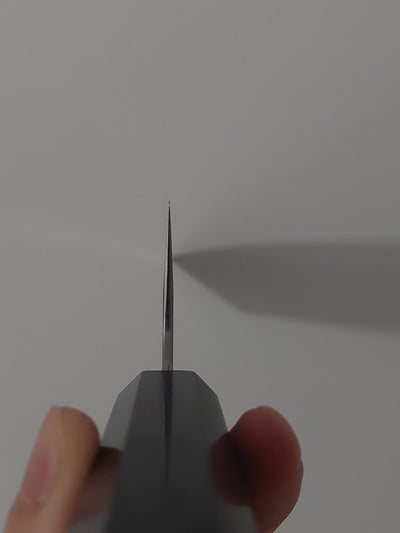
Drag to spin · pinch or scroll to zoom

Knives and Stones  |  SKU: KNS-SLDYP-SU270

K&S Yuepo SLD Nashiji Sujihiki 270mm, Ebony Handle

Sale price $210.00 Regular price $246.00

Availability

Goes well with

Detailed Specifications
Line K&S Yuepo SLD Nashiji
Profile Sujihiki / Slicing knife
Weight 183 g | 6.5 oz
Edge Length 271 mm | 10 43/64″
Heel Height 38 mm | 1 1/2″
Width @ Heel 2.0 mm | 5/64″
Width @ Mid 2.0 mm | 5/64″
Width @ 1cm from Tip 1.0 mm | 3/64″
Steel SLD | Semi-stainless
Blade Construction Sanmai - Stainless Clad
Maker's hardening hardness 58 HRC or more
Surface Finish Nashiji
Handle Octagonal Ebony
Region Other
Best for
  • First-timers
  • Pro chefs
  • Household
  • Students
  • Gift buyers

World-wide shipping via DHL Express, 3 to 6 days (not available in the UK).


K&S Yuepo — Built Around What Makes a Knife Cut Well

For more than a decade, we’ve worked closely with Japanese kitchen knives at K&S, handling and studying thousands of blades from hundreds of different makers. Across different steels, regions, forging styles and price points, one thing has always stood out to us: great cutting performance starts with great geometry.

Japanese knives have long set a very high benchmark, combining exceptional cutting performance with distinctive aesthetics and generations of knife-making tradition. But traditional production naturally comes with limitations in both output and cost, and that can put some of the best-performing knives beyond what many cooks want or need to spend.

Yuepo started from a simple idea: take what we’ve learned from all those knives over the years and build something of our own. After more than 18 months of development, testing and refinement, we arrived at K&S Yuepo — a range built around the characteristics we value most in a working kitchen knife.

Performance Starts Behind the Edge

At the heart of Yuepo is the geometry.

The blade is ground thin behind the cutting edge, reducing resistance as it moves through food and creating the smooth, effortless cutting feel we associate with some of our favourite high-performance knives.

Rather than designing the knife around specifications on paper, we focused on something much more practical: how the knife actually feels once it meets the board.

SLD — Performance Without the Fuss

For the steel, we chose SLD for its balance of edge performance, toughness and practicality.

It offers substantially better stain resistance than traditional carbon steel while retaining much of the crisp cutting feedback and easy sharpening that make carbon steels so enjoyable to use. The result is a forgiving steel that works equally well in a professional kitchen or in the hands of an enthusiastic home cook.

Designed by K&S

Yuepo is designed and developed by K&S and manufactured in China to our specifications.

Having direct control over the design and manufacturing process allows us to concentrate on the details that matter most to us — geometry, heat treatment, fit and finish — while keeping the range at a highly accessible price point.

The objective was never simply to make a lower-priced knife. We wanted to make a knife we genuinely enjoy cutting with.

Yuepo (月魄)

The name Yuepo is inspired by the moon-like texture across the blade surface, giving the range its distinctive character while still keeping the overall appearance clean and understated.

From ko-santoku, santoku and bunka through to K-tip gyuto, gyuto and sujihiki, Yuepo is offered as a family of profiles, allowing you to build a collection with a consistent look, feel and cutting philosophy.

Developed from a decade of experience. Designed around geometry. Made to be used.

Pros Cons
  • Budget friendly
  • Thin behind the edge
  • Ideal entry point to Japanese knives
  • Non-premium steel
Care Instruction
  1. Don't cut hard things! Japanese knives are brittle so bone hacking is a NO NO!
  2. Wash with neutral detergent after use, and wipe dry;
  3. Please don't wash knife with dishwasher, it will damage the wood handle;
  4. Be careful not to leave the knife close to a heat source for a long time;
  5. It is a lot more dangerous to cut with a blunt knife than a sharp knife!
  6. It is best to sharpen a Japanese knife regularly on a waterstone.
  7. Semi-stainless steel won't rust easily but may still patina

Customer reviews

5.0
Based on 3 verified reviews
★★★★★

Excellent fit and finish
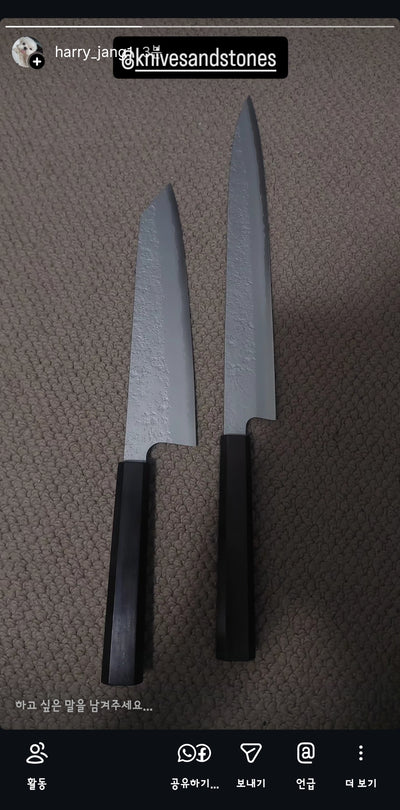
★★★★★I really like it.

Excellent fit and finish The steel and performance are perfect for the price.

★★★★★

Excellent fit and finish

Knives and Stones (K&S)

Established in 2014 and based in Sydney, Australia, Knives and Stones (K&S) is an Australian kitchen knife retailer with international customers. Through close relationships with Japanese blacksmiths, K&S directly imports Japanese kitchen knives.

Founder James Zhang’s Chinese heritage also brings a unique dimension to the business: collaborating with Chinese craftsmen to forge high-performance cleavers using Japanese steels—what James proudly calls “the real deal.”

Read more

Founded in 2014 and headquartered in Sydney, Australia, Knives and Stones (K&S) has grown from a small project into a kitchen knife retailer with customers in Australia, the USA, and China. What started as a small business dedicated to sourcing Japanese blades now serves chefs, collectors, and home enthusiasts across three countries.

At the heart of K&S is a personal connection with Japanese blacksmiths. Over the years, we have built relationships with established and new blacksmiths, allowing us to import their knives directly. This not only keeps each knife's origin clear and its craftsmanship intact, but also delivers outstanding value to our customers by removing unnecessary layers between the maker and the end user. K&S stocks both well-known and smaller Japanese knife brands.

Our international outlook is also shaped by founder James Zhang’s Chinese heritage. With a vision to bridge traditions, James has introduced Japanese steel to skilled Chinese makers to create a series of Japanese-steel cleavers. These blades, which James calls “the real deal”, combine Japanese steel with Chinese cooking use.

With physical presence and distribution networks in Australia, the USA, and China, Knives and Stones brings Japanese kitchen knives to customers in those three countries. Whether you’re a professional chef seeking a reliable workhorse, a collector chasing rare masterpieces, or a home cook ready to elevate your craft, K&S is committed to delivering tools that inspire confidence and creativity in the kitchen.

Est. 2014
Website knivesandstones.com.au Instagram @knivesandstones Facebook knivesandstones Read more about Knives and Stones (K&S)

Knife details

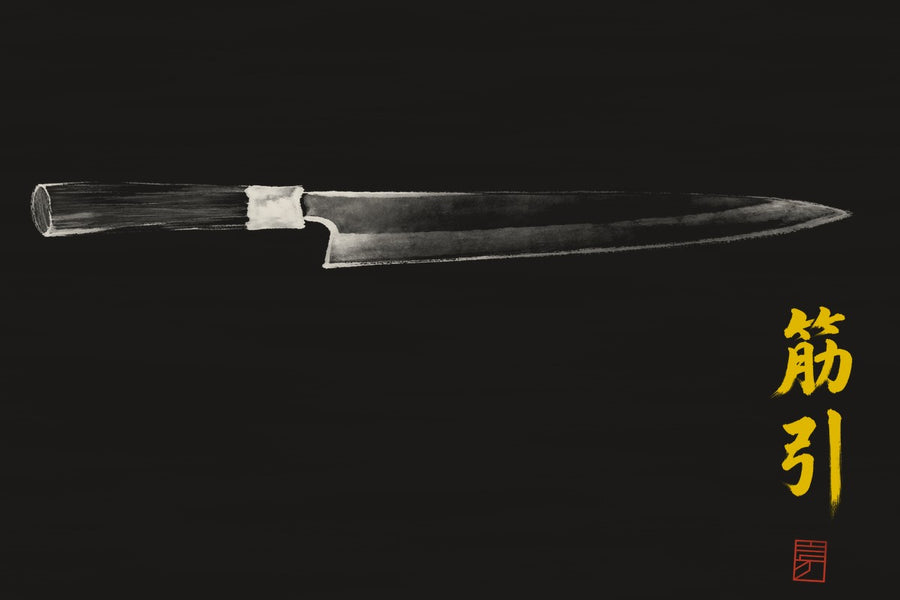
Sujihiki — knife profile
Profile

Sujihiki

筋引

Slicing knife · Double bevel

A long, narrow slicer for dividing large meat; Tojiro says it cuts sashimi too.

Read more
Steel properties
  1. Hardness Very high
  2. Edge retention Very good
  3. Toughness Good
  4. Rust resistance Fair
  5. Ease of sharpening Fair
  6. Sharpness Fair
Our ratings, inferred from published lab tests and composition.

Our edge-retention grade is a kitchen rating. It weighs the hardness each steel is sold at, which keeps a thin edge from rolling, twice as heavily as lab wear tests, and the final grade is our judgment from selling and sharpening these knives for over a decade. Lab card-cutting tests measure abrasive wear only, so they can rank carbon steels lower. Tap ? for the lab figure.

Steel

SLD

SLD鋼

Semi-stainless · Hitachi Metals (now Proterial)

Proterial cold work die steel near D2: 1.5% carbon, 12% chromium, hardening hardness over 58 HRC. Good edge life.

Read more
CladdingCoreClad line
Construction

Sanmai - Stainless Clad

三枚

3 layers · stainless clad

Hard core between two stainless layers, bare only at the edge; the cladding resists rust.

Read more
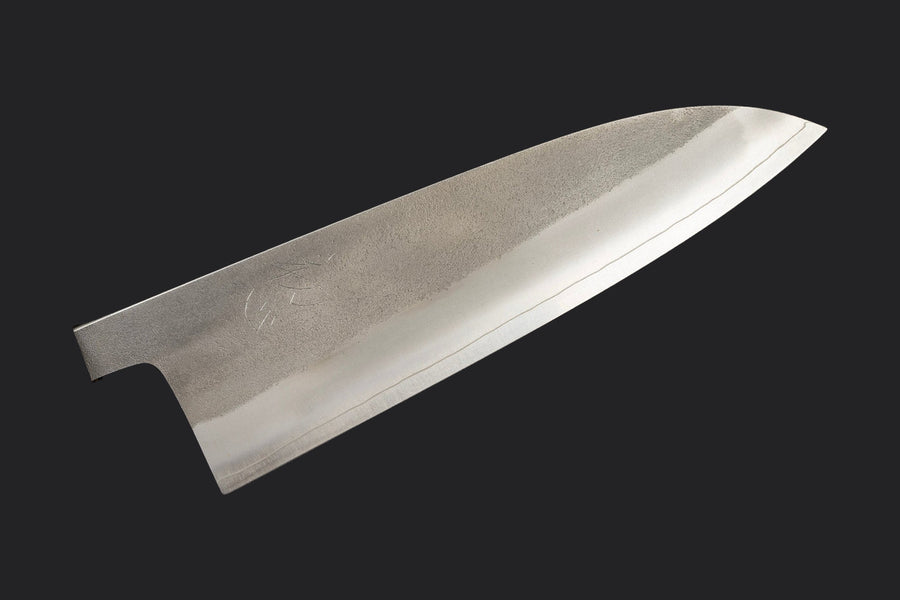
Nashiji — blade surface finish
Finish

Nashiji

梨地

Pear-skin texture

A fine matte texture like the skin of a nashi pear. It may help food release.

Read more
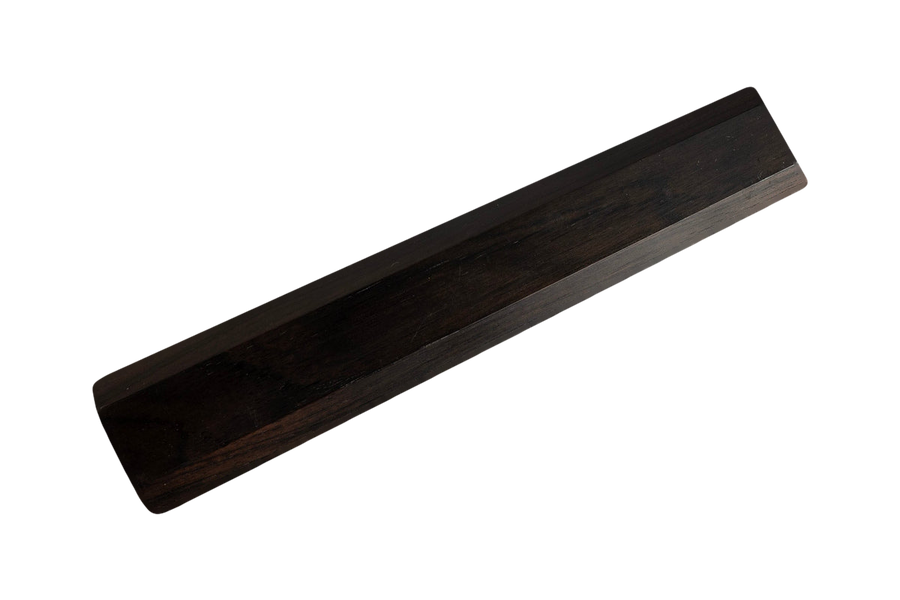
Octagonal Ebony handle
Handle

Octagonal Ebony

Octagonal WA

Dense, dark ebony in the eight-sided wa shape. The flats give a sure grip for either hand.

Frequently asked questions

What size sujihiki should I buy?

Between 210 and 270 mm, depending on where it will work. One Japanese maker lists 210 to 240 mm, double-bevel, for home use and 240 to 270 mm, single- or double-bevel, for professional kitchens.

Another, in Sakai, recommends 240 mm at home, with the size of your board in mind, and 270 mm for professional use.

Sujihiki or yanagiba: which do I need?

Most home cooks need the sujihiki. Choose the yanagiba when slicing raw fish for sashimi and sushi is the main job and you are prepared to learn single bevel sharpening.

A sujihiki is a long, narrow, double bevel slicer. Tojiro describes it as the knife for dividing large pieces of meat, known abroad as a slicer or carving knife, and says its length lets it cut sashimi as well. It carves roasts, trims sinew and portions fish, works in either hand and sharpens like any double bevel knife. Sujihiki run from about 210 to 300 mm, and 240 mm suits most home boards.

A yanagiba is the single bevel sashimi knife. It is ground on one side with a hollow back, and each slice is one long pull from heel to tip, so raw fish is cut cleanly rather than sawn. The edge is too fine for bones or anything hard. It is made for one hand and most are right handed, so check the listing if you are left handed. Sharpening means working the whole bevel and keeping the back flat. Yanagiba run from about 240 to 330 mm, with 270 and 300 mm the common sizes.

So for roasts, portioning meat and the occasional side of fish, buy a sujihiki. For regular sashimi and sushi work, buy a yanagiba and keep it for fish.

Which knife do I need for sushi and sashimi at home?

For occasional sushi at home, a sharp sujihiki (筋引) does the job. Tojiro describes it as a long, double-bevel slicer that can also be used for sashimi, and a double bevel works in either hand.

If sashimi is the point of the meal, choose a yanagiba (柳刃). Tojiro calls it the Kansai-style sashimi knife, now used across Japan, and it slices in one long pull from heel to tip. It is single bevel, so buy the one made for your hand.

If you start from whole fish, add a deba (出刃). Tojiro describes it as very thick and heavy, made for breaking fish down. The deba takes the fish apart and the slicer then cuts the fillets.

Is SLD the same steel as SKD11 and D2?

Close. Proterial, which makes SLD, lists AISI D2, DIN X153CrMoV12 and JIS SKD11 as its equivalent standards, while its own typical figures include 12% chromium and 1.5% carbon.

Proterial makes SLD as a cold work die steel with high abrasion resistance, for uses such as cold press dies, shear blades and gauges.

How can I tell sanmai, warikomi, damascus and honyaki apart?

Start with the line on the blade. On a clad knife, sanmai or warikomi, a hard steel core is joined to a softer cladding, and the join shows on the bevel. Tojiro says this is where the name kasumi (霞, haze) comes from: the hard steel takes a shine while the soft metal looks hazy.

A honyaki (本焼) is made of one steel. Before hardening the smith coats the parts that should stay softer with clay, so only the edge hardens fully, and the boundary can show as a hamon (刃文).

Damascus is a pattern made by forging many layers of different metals together and then bringing the pattern out with the finish. If it matters how a knife is built, ask before you buy. Our sanmai, warikomi and honyaki pages show each construction.

You May Also Like