KAI  |  SKU: KAI-SEKIMR-PT120

Kai Seki Magoroku Imayo MV Tsuchime Petty Knife 120mm

Sale price $68.00 Regular price $79.00

Pickup in Australia only

In Stock Now

Availability

Goes well with

Detailed Specifications
Line Kai Seki Magoroku Imayo
Profile Petty / Utility knife
Bevel Type Double Bevel
Weight 70 g | 2.5 oz
Edge Length 120 mm | 4 23/32″
Heel Height 27 mm | 1 1/16″
Width @ Heel 1.4 mm | 1/16″
Width @ Mid 1.4 mm | 1/16″
Width @ 1cm from Tip 0.8 mm | 1/32″
Steel MV (Molybdenum Vanadium) | Stainless
Blade Construction Monosteel
Typical hardness 54 to 60 HRC
Surface Finish Tsuchime
Handle Western Pakka Wood no Bolster
Region Seki
Best for
  • First-timers
  • Students
  • Enthusiasts

World-wide shipping via DHL Express, 3 to 6 days (not available in the UK).


The Kai Seki Magoroku Imayo line brings the heritage of Seki's legendary swordsmith Magoroku into your modern kitchen with a practical twist. Part of KAI's extensive Seki Magoroku family, the Imayo series combines traditional tsuchime (hammered) aesthetics with contemporary performance, making it an excellent entry point for those discovering Japanese knife culture.

Built from molybdenum vanadium stainless steel, these knives balance durability and sharpness retention. The molybdenum vanadium stainless steel holds an edge reliably and resists rust, which suits busy kitchens where maintenance time is limited. It's not the hardest steel you'll encounter, but that's actually a feature: it makes the knives easy to sharpen and forgiving to use.

The signature tsuchime (hammered) finish isn't just for show. Those deliberate dimples across the blade surface create tiny air pockets that help food release cleanly, reducing that annoying sticking you get with mirror-polished knives. Combined with KAI's precision factory grinding and Western-style laminated reinforced wood handles, the Imayo line offers a comfortable, practical introduction to Japanese knife geometry without the intimidation factor of more traditional designs.

At this price point, the Imayo represents excellent value. You're getting genuine Japanese craftsmanship from Seki City's most established manufacturer, solid stainless steel performance, and that distinctive hammered aesthetic that makes these knives stand out in any kitchen. They're built for daily use and backed by KAI's century-plus reputation for reliable cutlery.

Pros Cons
  • Budget friendly
  • Easy to look after
  • Ideal for the household
  • Great OOTB
  • Non-premium steel
  • On the thicker side
Care Instruction
  1. Don't cut hard things! Japanese knives are brittle so bone hacking is a NO NO!
  2. Wash with neutral detergent after use, and wipe dry;
  3. Please don't wash knife with dishwasher, it will damage the wood handle;
  4. Be careful not to leave the knife close to a heat source for a long time;
  5. It is a lot more dangerous to cut with a blunt knife than a sharp knife!
  6. It is best to sharpen a Japanese knife regularly on a waterstone.

KAI

KAI (貝印), a Seki blade company since 1908

KAI (貝印) is a Japanese blade company founded in Seki in 1908, when Saijiro Endo began making pocket knives there. Its head office is now in Tokyo, and its group maker, KAI Industries, has its factories in Seki and Gujō.

We stock two of its knife brands, Shun and Seki Magoroku. The Seki Magoroku name comes from the swordsmith Seki no Magoroku.

Read more

KAI was established as a company in Seki, Gifu, in 1920, began making safety razor blades in 1932 and launched its Shun (旬) knives in 2000. Today KAI says it sells more than 10,000 products, covering cooking and grooming tools as well as medical and industrial blades.

Shun says each of its knives is crafted in Seki City through more than 100 steps, and that its Classic and Premier series use VG-MAX, a steel proprietary to Shun. Those are the two Shun lines we stock.

From Seki Magoroku we stock the Imayo (いまよう) line, which KAI describes as a series with a high-hardness blade and a three-step edge for long-lasting sharpness.

“A blade company founded in Seki in 1908, behind Shun and Seki Magoroku.”

Est. 1908 | 明治41年
Known for Shun and Seki Magoroku kitchen knives
Website kai-group.com Read more about KAI

KAI · Seki

Knife details

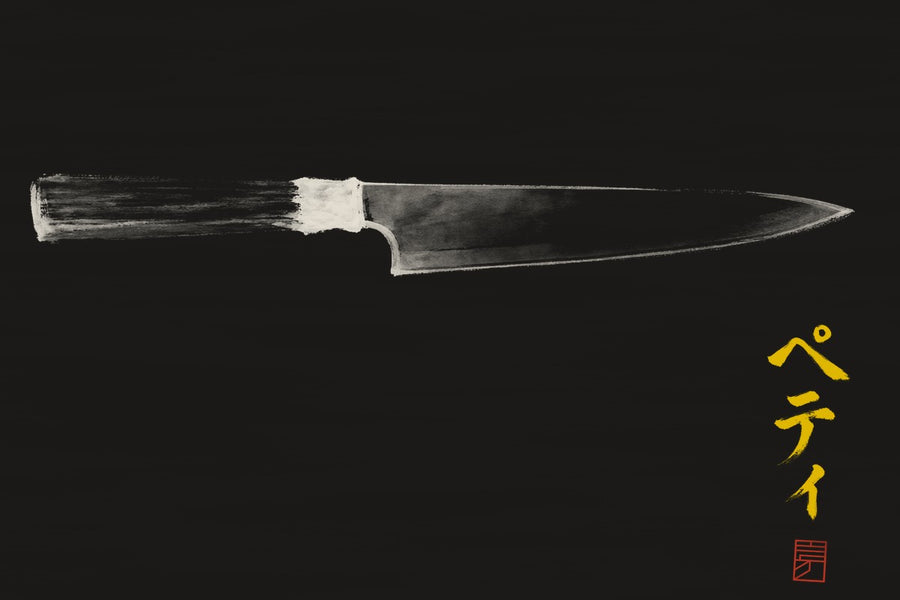
Petty — knife profile
Profile

Petty

ペティ

Utility knife · Double bevel

Small, slim double-bevel utility knife for peeling, trimming and small board jobs.

Read more
Steel properties
  1. Hardness Low
  2. Edge retention Low
  3. Toughness Good
  4. Rust resistance High
  5. Ease of sharpening High
  6. Sharpness Good
Our ratings, inferred from published lab tests and composition.

Our edge-retention grade is a kitchen rating. It weighs the hardness each steel is sold at, which keeps a thin edge from rolling, twice as heavily as lab wear tests, and the final grade is our judgment from selling and sharpening these knives for over a decade. Lab card-cutting tests measure abrasive wear only, so they can rank carbon steels lower. Tap ? for the lab figure.

Steel

MV (Molybdenum Vanadium)

モリブデンバナジウム鋼

Stainless

We list MV steel knives from Masamoto Sohonten, Tojiro, KAI and Sakai Takayuki.

Read more
Stainless steelfully hardened
Construction

Monosteel

モノスチール

One steel throughout · stainless

One steel hardened throughout, no cladding. Tough and simple; a little harder to thin.

Read more
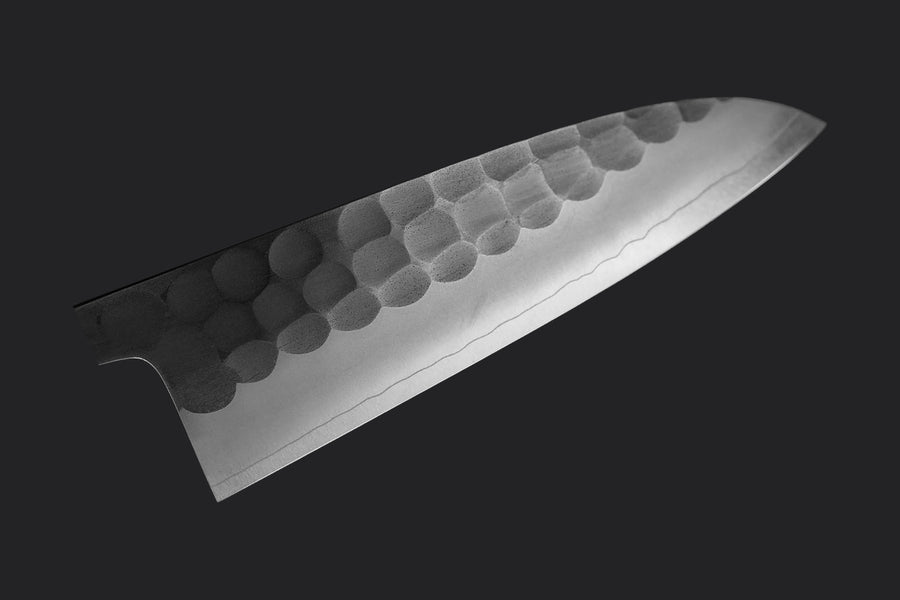
Tsuchime — blade surface finish
Finish

Tsuchime

槌目

Hammered surface

Hammer marks across the upper blade. The dimples may help food release.

Read more
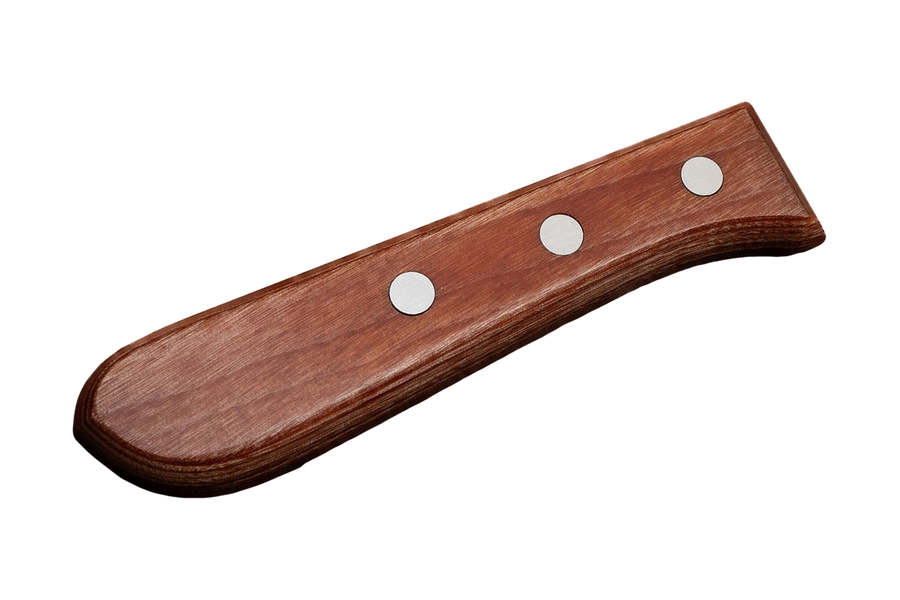
Western Pakka Wood no Bolster handle
Handle

Western Pakka Wood no Bolster

Western without bolster

Pakka wood western grip, no bolster. Light and affordable; resin-infused wood is stable.

Frequently asked questions

What is a petty knife and when do I need one?

A petty is a small utility knife, from the French petit. It is commonly shaped like a small gyuto and runs from 120 to 150 mm, up to 180 mm. Its clearest role is detailed work where a larger knife feels cumbersome: fruit peeling, garnish work, condiments, and small board work beside a gyuto or santoku.

A knife maker, Tojiro, frames the petty as a useful second knife, not an automatic necessity, and recommends santoku plus petty or gyuto plus petty combinations. It is not a replacement for a full size chef's knife; it lacks the blade length and belly for efficient chopping, rocking, or breaking down larger proteins. Treat it as a precision tool, not an all-rounder.

How long is a petty knife?

Petty knife lengths vary by maker: KAI's guide defines a petty (ペティナイフ) as a small knife with a narrow blade measuring 150 mm or under. Its table gives 90 to 150 mm, and it describes the shape as a smaller gyuto with a pointed tip.

We list petty knives from 70 mm to 165 mm, including lengths above the limit used in KAI's guide.

What is a good second Japanese knife after a gyuto?

For most cooks the second knife after a gyuto is a small utility knife (petty) of about 150mm. If most of your cooking is vegetables, make it a vegetable knife (nakiri) instead; if you carve or slice a lot of meat or fish, a slicing knife (sujihiki).

A gyuto covers the main board work, so the gap it leaves is small work. A petty does the jobs where a full-size blade is clumsy: peeling, trimming and coring in the hand, and small board jobs such as shallots, fruit and herbs. Our petty knife FAQ covers the shape in detail.

A nakiri earns the second slot if you prep vegetables every day. Its flat edge meets the board along its whole length, so slices separate cleanly. It has no pointed tip, so the gyuto still does the tip work.

A sujihiki is the choice for carving roasts and portioning large pieces of meat or fish. The long, narrow blade has less surface touching the food than a gyuto, so slices come away cleaner. 240mm and 270mm are the popular lengths.

A santoku or a bunka is a weak second knife: both are all-purpose shapes that repeat what the gyuto does. If your gyuto already handles the small jobs comfortably, the second knife can wait, and a whetstone to keep the first one sharp is the better spend.

What is the Seki Magoroku Imayo line?

Imayo (いまよう) is a series inside KAI's Seki Magoroku line. KAI says its hammered tsuchime pattern gives a luxurious look, and that its high-hardness blade is finished with a three-step sharpening process for a sharp edge with long-lasting cutting performance.

It is one of the series on KAI's Seki Magoroku knives page.

Can Seki Magoroku knives go in the dishwasher?

We suggest keeping Seki Magoroku knives out of the dishwasher. Wash each knife by hand and dry it straight away.

Is Shun made by KAI, and how is it different from Seki Magoroku?

Yes. KAI launched Shun in 2000, and its own history page calls it a premium knife (高級包丁). KAI traces its history to 1908, when Saijiro Endo began making pocket knives, and the company was established in Seki, Gifu, in 1920.

Seki Magoroku is also a KAI brand. KAI says it carries the craft and spirit of the swordsmith Seki no Magoroku into modern knifemaking, fused with KAI's own technology, and its top tier is the Master Line.