Drag to spin · pinch or scroll to zoom

Kouki  |  SKU: KK_B2KU_PT135

Kouki Blue2 Kurouchi Petty 135mm

Sale price $134.00 Regular price $158.00

IMPORTANT: Carbon steel knives can rust or patina quickly if not cared for properly. They require regular cleaning, drying, and oiling. If you are unfamiliar with carbon steel maintenance, we recommend choosing a stainless steel option instead.

Pickup in Australia only

In Stock Now

Availability

Goes well with

Detailed Specifications
Line Kouki Blue 2 Kurouchi
Profile Petty / Utility knife
Bevel Type Double Bevel
Weight 86 g | 3.0 oz
Edge Length 139 mm | 5 15/32″
Heel Height 35 mm | 1 3/8″
Width @ Heel 3.5 mm | 9/64″
Width @ Mid 1.7 mm | 1/16″
Width @ 1cm from Tip 1.0 mm | 3/64″
Steel Blue 2 / Aogami #2 | Carbon
Blade Construction Sanmai - Soft Iron Clad
Maker's hardening hardness 60 HRC or more
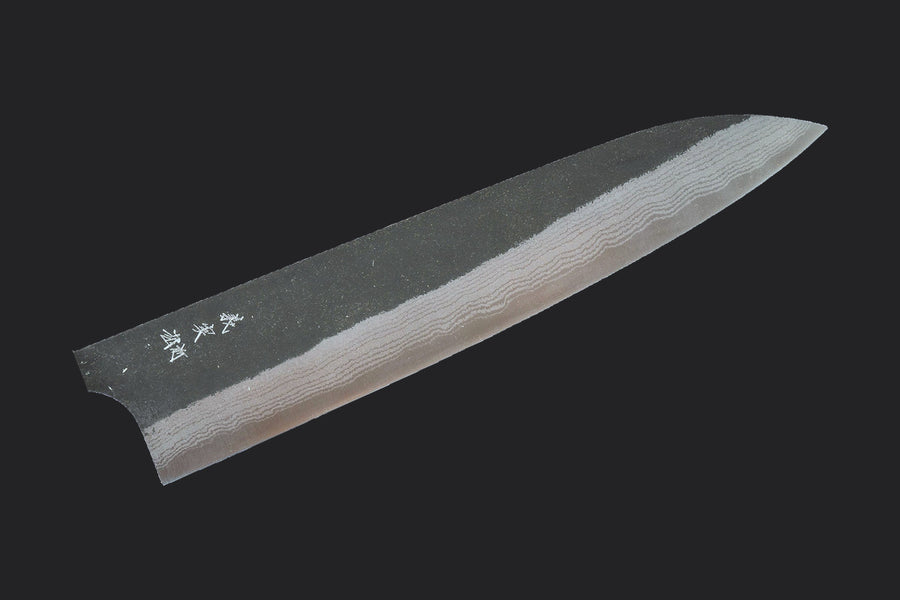
Surface Finish Kurouchi
Handle
Region Tosa
Best for
  • Enthusiasts
  • Gift buyers

World-wide shipping via DHL Express, 3 to 6 days (not available in the UK).


Kouki Hashimoto is a name to keep an eye on. Having worked as an instructor at Kajiya Soseijuku — the Tosa Forged Blade School — before establishing his own brand in 2025, Hashimoto comes to independent knifemaking with a deeper grounding in the craft than most newcomers. Teaching forging demands a thorough understanding of what makes a knife work, and that foundation shows clearly in this Blue 2 Kurouchi line. For a first independent release, it punches well above what you'd typically expect.

The construction is a classic Sanmai with soft iron cladding over a Blue 2 (Aogami 2) core — honest about its maintenance requirements. Both the iron cladding and the reactive core steel need regular attention to stay rust-free, which is the trade-off you accept for that characterful Kurouchi finish and the aggressive edge that Blue 2 delivers. The forged taper in the spine is well executed, and the short length gives the blade a nimble, responsive feel that makes it easy to direct with precision.

The geometry is genuinely impressive for this price. Minimal thickness behind the edge makes for clean food penetration, and the low Shinogi line means food release kicks in reliably even on shorter cuts — the slice doesn't need to travel far up the bevel before it starts to peel away. Where this design is more honest about its limits is against dense, tough produce like sweet potato or carrot — the narrow bevel creates a steeper angle from the Hira, which causes more wedging as the blade pushes through denser material. On softer everyday prep though, it cuts noticeably better than most Tosa-made Kurouchi knives at a similar or higher price point.

For enthusiasts looking for an entry point into forged carbon steel knives, or for anyone after a gift with genuine craft behind it and a story worth telling, the Kouki line is a very easy recommendation.

Pros Cons
  • Excellent performance
  • Budget friendly
  • Thin behind the edge
  • Prone to rust
Care Instruction
  1. Don't cut hard things! Japanese knives are brittle so bone hacking is a NO NO!
  2. Wash with neutral detergent after use, and wipe dry;
  3. Please don't wash knife with dishwasher, it will damage the wood handle;
  4. Be careful not to leave the knife close to a heat source for a long time;
  5. It is a lot more dangerous to cut with a blunt knife than a sharp knife!
  6. It is best to sharpen a Japanese knife regularly on a waterstone.
  7. Oil the (carbon) knife if storing for an extended period of time to prevent rust.

Kouki Hashimoto

Kouki Hashimoto is a relatively young blacksmith and one that has shown promising skills in his craft. As a second year student of Tosa Forged Blade School Kajiya Soseijuku, he undertakes systematic training and decided to be a instructor after his graduation. It's only until 2025 that he decided to establish his own brand named after himself, and the first batch of knives we received have already shown signs of thoughtful knife designs and excellent executions that brings good performance.

“One of many future stars rising from Tosa Forged Blade School with promising skill and understanding to rustic traditional knives”

Est. 2025 | 令和7年
Instagram @kouki Read more about Kouki Hashimoto

Kouki Hashimoto · Tosa

Knife details

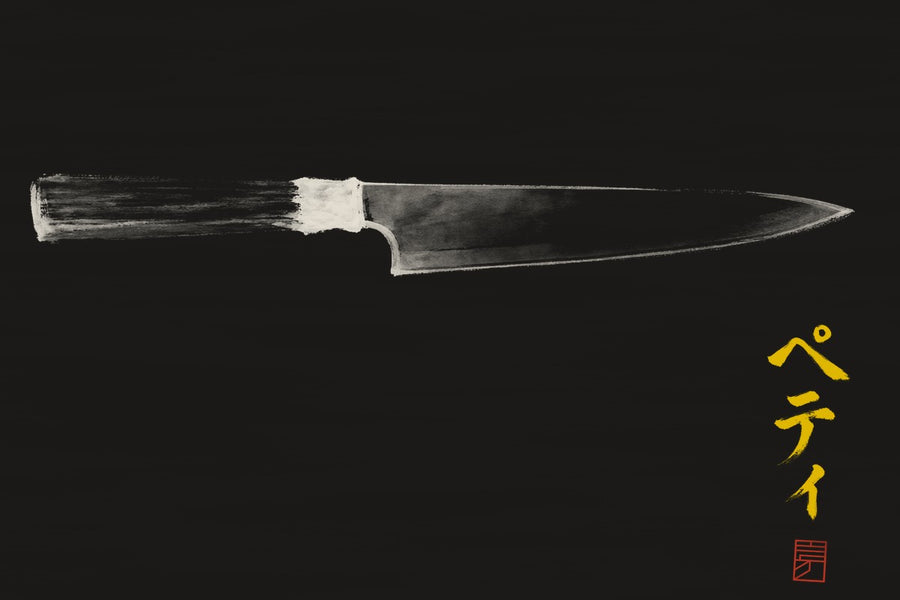
Petty — knife profile
Profile

Petty

ペティ

Utility knife · Double bevel

Small, slim double-bevel utility knife for peeling, trimming and small board jobs.

Read more
Steel properties
  1. Hardness Very good
  2. Edge retention Very good
  3. Toughness Very good
  4. Rust resistance Low
  5. Ease of sharpening High
  6. Sharpness Very high
Our ratings, inferred from published lab tests and composition.

Our edge-retention grade is a kitchen rating. It weighs the hardness each steel is sold at, which keeps a thin edge from rolling, twice as heavily as lab wear tests, and the final grade is our judgment from selling and sharpening these knives for over a decade. Lab card-cutting tests measure abrasive wear only, so they can rank carbon steels lower. Tap ? for the lab figure.

Steel

Blue 2 / Aogami #2

青二鋼

Carbon · Hitachi Metals (now Proterial)

Proterial carbon steel, 1.05 to 1.15% carbon with chromium and tungsten; not stainless.

Read more
CladdingCoreClad line
Construction

Sanmai - Soft Iron Clad

三枚・軟鉄

3 layers · soft iron clad

Hard core between two soft iron layers, bare at the edge. The iron patinas and rusts.

Read more
Kurouchi — blade surface finish
Finish

Kurouchi

黒打

Black forge scale

Dark forge scale left on the upper blade. The bevel and edge still need care.

Read more

Frequently asked questions

What is a petty knife and when do I need one?

A petty is a small utility knife, from the French petit. It is commonly shaped like a small gyuto and runs from 120 to 150 mm, up to 180 mm. Its clearest role is detailed work where a larger knife feels cumbersome: fruit peeling, garnish work, condiments, and small board work beside a gyuto or santoku.

A knife maker, Tojiro, frames the petty as a useful second knife, not an automatic necessity, and recommends santoku plus petty or gyuto plus petty combinations. It is not a replacement for a full size chef's knife; it lacks the blade length and belly for efficient chopping, rocking, or breaking down larger proteins. Treat it as a precision tool, not an all-rounder.

How long is a petty knife?

Petty knife lengths vary by maker: KAI's guide defines a petty (ペティナイフ) as a small knife with a narrow blade measuring 150 mm or under. Its table gives 90 to 150 mm, and it describes the shape as a smaller gyuto with a pointed tip.

We list petty knives from 70 mm to 165 mm, including lengths above the limit used in KAI's guide.

What is a good second Japanese knife after a gyuto?

For most cooks the second knife after a gyuto is a small utility knife (petty) of about 150mm. If most of your cooking is vegetables, make it a vegetable knife (nakiri) instead; if you carve or slice a lot of meat or fish, a slicing knife (sujihiki).

A gyuto covers the main board work, so the gap it leaves is small work. A petty does the jobs where a full-size blade is clumsy: peeling, trimming and coring in the hand, and small board jobs such as shallots, fruit and herbs. Our petty knife FAQ covers the shape in detail.

A nakiri earns the second slot if you prep vegetables every day. Its flat edge meets the board along its whole length, so slices separate cleanly. It has no pointed tip, so the gyuto still does the tip work.

A sujihiki is the choice for carving roasts and portioning large pieces of meat or fish. The long, narrow blade has less surface touching the food than a gyuto, so slices come away cleaner. 240mm and 270mm are the popular lengths.

A santoku or a bunka is a weak second knife: both are all-purpose shapes that repeat what the gyuto does. If your gyuto already handles the small jobs comfortably, the second knife can wait, and a whetstone to keep the first one sharp is the better spend.

Will a carbon steel knife rust, and how do I look after it?

Yes, carbon steels such as Aogami (Blue) and Shirogami (White) are not stainless steels, so left wet they can spot or rust.

Care is simple once it becomes habit. Wipe the blade as you go, especially after acidic food like citrus, tomato or onion. When you finish, wash it in warm water with a little soap and dry it straight away with a towel. Do not let it air dry, leave it in the sink or the dish rack, or put it in the dishwasher. Store it dry: on a magnetic strip or in a ventilated block in a dry spot.

If the knife will sit unused for a while, wipe on a thin layer of oil before storing. In our video James shows that mineral oil can stand in for camellia (tsubaki) oil, and he picks one labelled medical grade; we list the Kitchen Knife / Cutting Board Mineral Oil Medical Grade for this. If you find light rust, lift it with a rust eraser and a little water, then dry and oil the blade; we list the CKK and Naniwa rust erasers.

What is the difference between Blue 2 and White 2 steel?

Blue 2 is White 2 with tungsten and a little chromium added. Blue 2 holds its edge longer. White 2 sharpens faster and takes a very keen edge. Both are carbon steels that will rust if left wet.

The figures come from Proterial, which makes both. Each has 1.05 to 1.15% carbon. Blue 2 (Aogami 2) adds 1.00 to 1.50% tungsten and 0.20 to 0.50% chromium. White 2 (Shirogami 2) lists neither, and Proterial describes it as a carbon steel with minimum impurities. Proterial says the tungsten and chromium improve heat treatment and wear resistance, and gives a hardening hardness over 60 HRC for both.

In use, the tungsten forms hard carbides that resist wear, so a Blue 2 edge lasts longer between sharpenings. White 2 has none, so it comes back on a whetstone very quickly. The chromium in Blue 2 is far below the 10.5% a steel needs to be stainless, so it gives no real rust protection. Wipe either steel dry after use and expect a patina.

Choose Blue 2 if you want to sharpen less often. Choose White 2 if you enjoy sharpening and want the keenest edge. We list both widely: Blue 2 from Nigara, Myojin Riki and Anryu, and White 2 from Masamoto Sohonten, Sakai Takayuki and Yoshikane.