


Masutani VG1 Nashiji Small Santoku 135mm
Masutani VG1 Nashiji Small Santoku 135mm is backordered and will ship as soon as it is back in stock.
Sold out right now
Leave your email and we’ll send one message the moment it’s back in stock.
One email, no marketing. Privacy policy.
Availability
Delivery unavailable for this item. Available for in-store pickup only.
-
St Peters, NSW —2 Bishop St, Unit 2, St Peters NSW 2044
Goes well with
Detailed Specifications
| Line | Masutani VG1 Nashiji |
| Profile | Santoku / Santoku |
| Bevel Type | Double Bevel |
| Weight | 108 g | 3.8 oz |
| Edge Length | 130 mm | 5 1/8″ |
| Heel Height | 35 mm | 1 3/8″ |
| Width @ Heel | 1.6 mm | 1/16″ |
| Width @ Mid | 1.6 mm | 1/16″ |
| Width @ 1cm from Tip | 1.2 mm | 3/64″ |
| Steel | VG1 | Stainless |
| Blade Construction | Sanmai - Stainless Clad |
| Maker's hardening hardness | 61 HRC or more |
| Surface Finish | Nashiji |
| Handle | Western Pakka Wood with Bolster |
| Region | Echizen |
| Best for |
|


| Pros | Cons |
|
|
- Don't cut hard things! Japanese knives are brittle so bone hacking is a NO NO!
- Wash with neutral detergent after use, and wipe dry;
- Please don't wash knife with dishwasher, it will damage the wood handle;
- Be careful not to leave the knife close to a heat source for a long time;
- It is a lot more dangerous to cut with a blunt knife than a sharp knife!
- It is best to sharpen a Japanese knife regularly on a waterstone.
Knife details
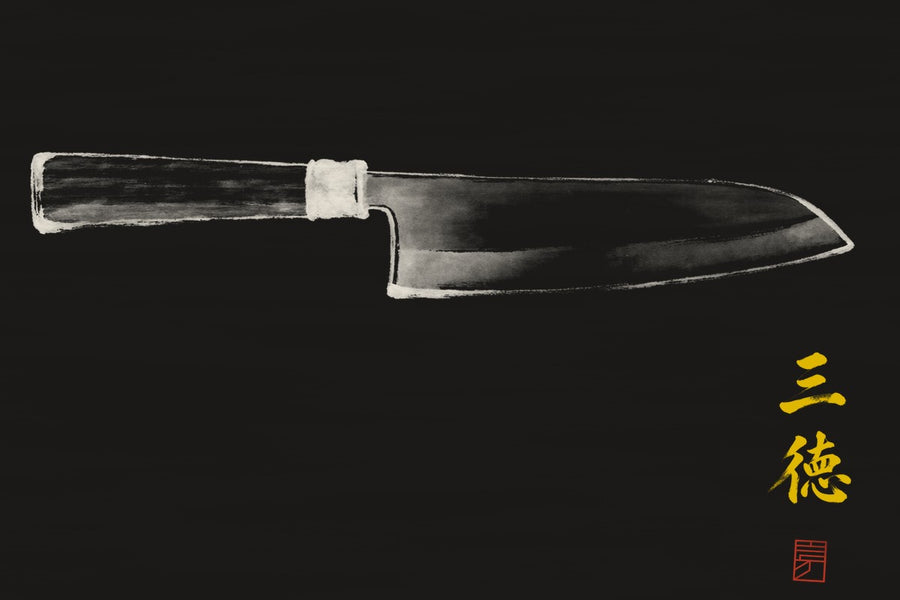
Santoku
三徳
Santoku · Double bevel
An all-purpose knife for meat, fish and vegetables, with a wide blade and a rounded tip.
Read more-
Hardness
Good
How hard the steel is after heat treatment, measured in HRC. Harder steel can take a thinner, sharper edge but is more likely to chip. Maker's hardening hardness: 61 HRC or more
-
Edge retention
Good
How long the edge stays sharp in kitchen use before it needs sharpening. Not lab-tested. Hardness used: 59 HRC, the usual hardness makers sell it at.
-
Toughness
Good
How well the steel resists chipping and cracking from bones, hard boards or twisting.
-
Rust resistance
High
How slowly the steel rusts or stains when left wet.
-
Ease of sharpening
High
How quickly the steel comes back to sharp on a whetstone.
-
Sharpness
Good
How fine an edge the steel can take and hold. Judged from the hard carbides inside it: smaller and fewer carbides allow a keener edge.
Our ratings, inferred from published lab tests and composition.
Our edge-retention grade is a kitchen rating. It weighs the hardness each steel is sold at, which keeps a thin edge from rolling, twice as heavily as lab wear tests, and the final grade is our judgment from selling and sharpening these knives for over a decade. Lab card-cutting tests measure abrasive wear only, so they can rank carbon steels lower. Tap ? for the lab figure.
VG1
V金1
Stainless · Takefu Special Steel
Takefu stainless; Takefu lists 1.00% carbon, 14.00% chromium and 0.30% molybdenum.
Read moreSanmai - Stainless Clad
三枚
3 layers · stainless clad
Hard core between two stainless layers, bare only at the edge; the cladding resists rust.
Read more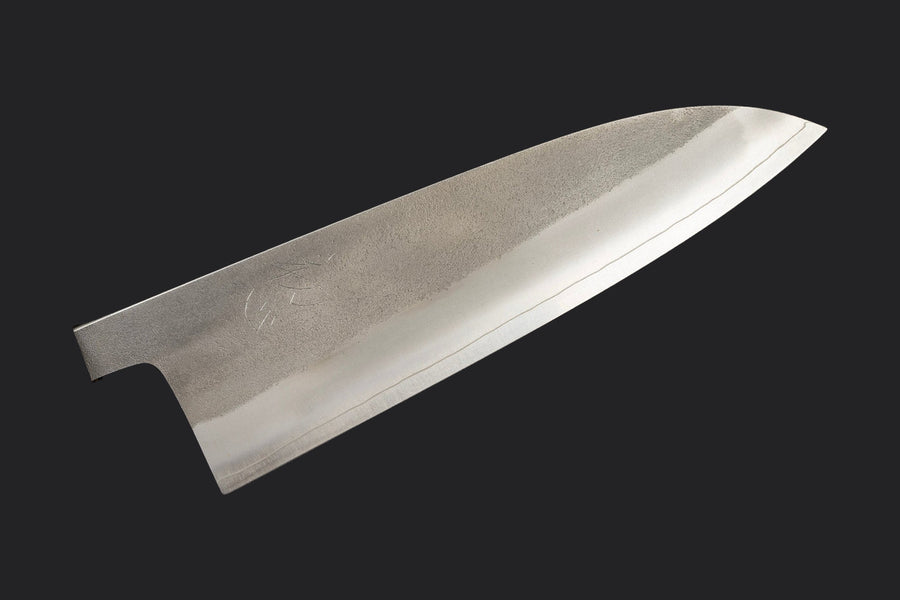
Nashiji
梨地
Pear-skin texture
A fine matte texture like the skin of a nashi pear. It may help food release.
Read more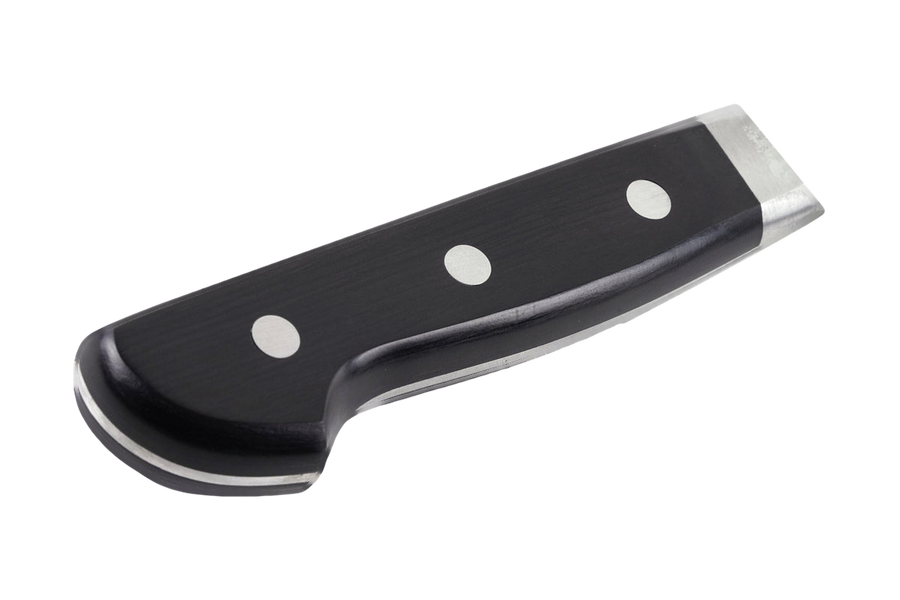
Western Pakka Wood with Bolster
Western with bolster
Pakka wood western grip with a bolster. Resin-laminated wood resists water; entry-level.
Frequently asked questions
Gyuto or santoku: which should I choose?
Rock chop or up-and-down chop: which knife shape suits me?
What does santoku mean?
What is the difference between VG1 and VG10?
How many generations has Masutani been making knives?
How can I tell sanmai, warikomi, damascus and honyaki apart?
You May Also Like
-
Masutani VG1 Nashiji Nakiri 165mm SlimSale price $125.00 Regular price $146.00Unit price
-
Masutani Kokuryu VG10 Damascus Nakiri 165mm Western HandleSale price $150.00 Regular price $176.00Unit price
-
Masutani Kokuryu VG10 Damascus Tsuchime Small Santoku 135mm Western HandleSale price $134.00 Regular price $158.00Unit price
-
Masutani VG1 Tsuchime Nakiri 165mm SlimSale price $125.00 Regular price $146.00Unit price
-
Masutani VG1 Tsuchime Small Santoku 135mm Western HandleSale price $115.00 Regular price $135.00Unit price
-
Masutani VG1 Tsuchime Nakiri 165mm Western HandleSale price $134.00 Regular price $158.00Unit price
-
Masutani Sairyu VG10 Damascus Small Santoku 135mm Western HandleSale price $125.00 Regular price $146.00Unit price
-
Hatsukokoro Ginsan Kurouchi Damascus Santoku 170mm Carbon Fibre HandleSale price $764.00 Regular price $898.00Unit price
