Shibata  |  SKU: TK-BRCD-HS165

Shibata Tinker Barracuda Teeth Honesuki 165mm

Sale price $622.00 Regular price $730.00

IMPORTANT: Carbon steel knives can rust or patina quickly if not cared for properly. They require regular cleaning, drying, and oiling. If you are unfamiliar with carbon steel maintenance, we recommend choosing a stainless steel option instead.

Pickup in Australia only

In Stock Now

Availability

Detailed Specifications
Line Tinker
Profile Honesuki / Poultry boning knife
Bevel Type Double Bevel
Weight 120 g | 4.2 oz
Edge Length 165 mm | 6 1/2″
Heel Height 40 mm | 1 37/64″
Width @ Heel 4.5 mm | 11/64″
Width @ Mid 2.0 mm | 5/64″
Width @ 1cm from Tip 0.8 mm | 1/32″
Steel Blue Super / Aogami Super | Carbon
Blade Construction Sanmai - Stainless Clad
Maker's hardening hardness 60 HRC or more
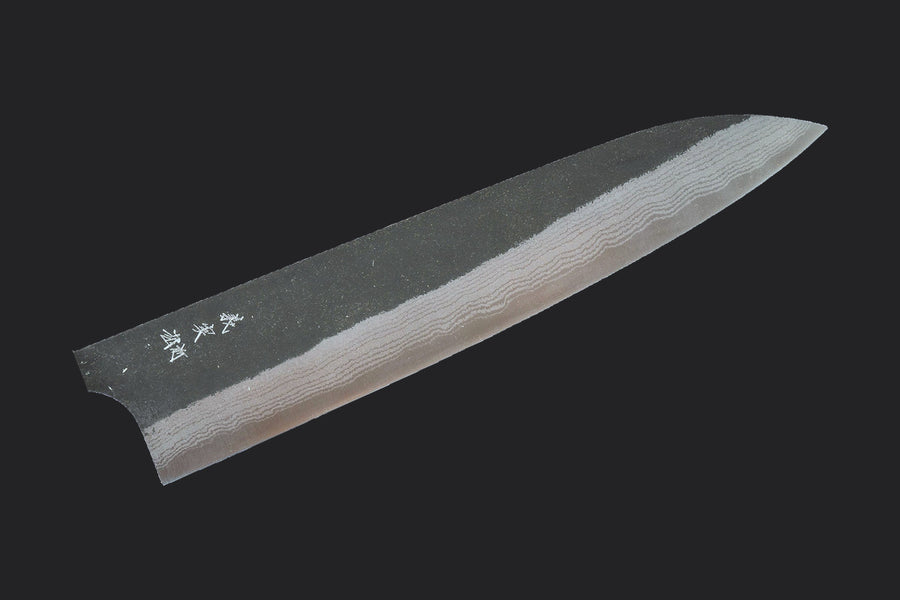
Surface Finish Kurouchi
Handle Octagonal Rosewood Handle
Region Fukuyama
Best for
  • Enthusiasts
  • Collectors
  • Pro chefs

World-wide shipping via DHL Express, 3 to 6 days (not available in the UK).


Tinker is one of Takayuki Shibata's own brands at Iron Clad. His site describes it as a knife series that combines playful design and functionality, with outdoor-inspired knives suitable for any type of cooking, and says his chef friends helped him develop it.

Shibata's site lists the line-up as TANK, Saber teeth, Barracuda and Iron horse, and says the TANK began when a friend asked for a tough outdoor-style knife that can do all kinds of cooking.

The Tinker knives we list are sanmai blades clad in stainless steel, with a kurouchi finish: the Chibi Tank in 135 mm and 180 mm, and the Barracuda Teeth honesuki in 165 mm.

Pros Cons
  • Excellent performance
  • Highly collectable
  • Great artistic
  • Great OOTB
  • High budget
  • Need extra care
  • Semi-stainless can rust
Care Instruction
  1. Don't cut hard things! Japanese knives are brittle so bone hacking is a NO NO!
  2. Wash with neutral detergent after use, and wipe dry;
  3. Please don't wash knife with dishwasher, it will damage the wood handle;
  4. Be careful not to leave the knife close to a heat source for a long time;
  5. It is a lot more dangerous to cut with a blunt knife than a sharp knife!
  6. It is best to sharpen a Japanese knife regularly on a waterstone.
  7. Oil the (carbon) knife if storing for an extended period of time to prevent rust.

Iron Clad

Iron Clad, Takayuki Shibata's company in Fukuyama

Iron Clad/Koutetsu is the made-in-house brand by Shibata Knives, bearing the motto “Art Over Beauty”, it’s a sharpening/grinding focus brand that known for its Hatsuke(刃付け, bevel-making) skill. The sharpener and leader Takayuki Shibata was the founder of Shibata Knives and other sister brands of Iron Clad, including the highly praised Masakage and the value-focused Tsunehisa.

The knife offered by Iron Clad are engraved with 崇行, which is Shibata’s first name Takayuki. Each Iron Clad knife is grinded by hand sharpening on rotary stone to produce the excellent geometry that Shibata-san developed through years of his experience on sharpening. These knives are generally referred as Koutetsu SG2/AS/Chromax, they share a similar profile, finished uniformly with Migaki finish and sharpened with Shibata’s unique differential grit sharpening technique to get a smooth yet bitey edge. The knives under the banner of Koutetsu are elegant and simple while great in performance, building Iron Clad a fame for its professional oriented designs.

“Takayuki Shibata's knife company in Fukuyama, behind the Koutetsu, Masakage and Tsunehisa brands.”

Est. 2009 | 平成21年
Known for Koutetsu knives, and the Masakage and Tsunehisa brands
Website shibataknives.com Instagram @knife_gallery.jp Read more about Iron Clad

Iron Clad · Fukuyama

Knife details

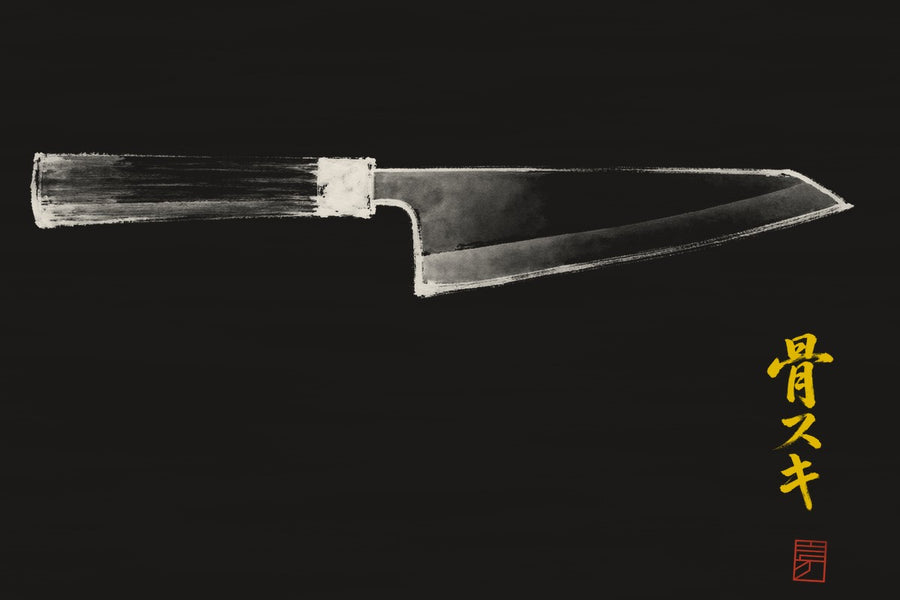
Honesuki — knife profile
Profile

Honesuki

骨スキ

Poultry boning knife · Single or double bevel

Strips meat from bone; a Seki maker lists its square honesuki for fowl and fish.

Read more
Steel properties
  1. Hardness Very high
  2. Edge retention Very good
  3. Toughness Good
  4. Rust resistance Low
  5. Ease of sharpening Good
  6. Sharpness High
Our ratings, inferred from published lab tests and composition.

Our edge-retention grade is a kitchen rating. It weighs the hardness each steel is sold at, which keeps a thin edge from rolling, twice as heavily as lab wear tests, and the final grade is our judgment from selling and sharpening these knives for over a decade. Lab card-cutting tests measure abrasive wear only, so they can rank carbon steels lower. Tap ? for the lab figure.

Steel

Blue Super / Aogami Super

青紙スーパー

Carbon · Hitachi Metals (now Proterial)

Proterial carbon steel, 1.45% carbon, tungsten and vanadium, hardening hardness over 60 HRC. Long edge; rusts.

Read more
CladdingCoreClad line
Construction

Sanmai - Stainless Clad

三枚

3 layers · stainless clad

Hard core between two stainless layers, bare only at the edge; the cladding resists rust.

Read more
Kurouchi — blade surface finish
Finish

Kurouchi

黒打

Black forge scale

Dark forge scale left on the upper blade. The bevel and edge still need care.

Read more
Octagonal Rosewood Handle handle
Handle

Octagonal Rosewood Handle

Octagonal WA

Rosewood, eight-sided, with a black synthetic horn ferrule. Reddish-brown, fine grain.

Frequently asked questions

What is a honesuki for?

A honesuki (骨スキ) strips meat from the bone, the job a boning knife does elsewhere.

One Japanese knife maker describes the traditional honesuki as a shape unique to Japan, made with Japanese knife techniques and ground single-bevel (片刃), so it can also be used to prepare fish.

Can left-handed cooks use single bevel knives?

A standard single bevel knife is ground for right-handed use, and a left-handed one is made with the bevel reversed. Some makers offer left-handed versions.

Contact us and we will check what we can order or have in stock.

What is a garasuki?

A garasuki is the bigger, heavier brother of the Japanese poultry boning knife (honesuki), made for larger birds and heavier cuts.

To picture one, start with the honesuki. It is short, stiff and triangular, with a thick spine and a straight edge running to a pointed tip, typically 145mm to 165mm long with 150mm the standard. It works by rigidity where a Western boning knife works by flex: the tip finds the gap in a joint, the heel pops through cartilage, and the stiff blade scrapes meat off the bone.

What you break down decides which one you need. For jointing whole chickens and ducks the honesuki is the knife. A garasuki earns its place only if you regularly work on larger birds. For large cuts of red meat, look at a butcher knife, which is heavier and rounder at the front and made for primals more than joints.

Our honesuki guide covers the shape and how it is used, and the butcher knife guide covers the heavier meat knife.

Will a carbon steel knife rust, and how do I look after it?

Yes, carbon steels such as Aogami (Blue) and Shirogami (White) are not stainless steels, so left wet they can spot or rust.

Care is simple once it becomes habit. Wipe the blade as you go, especially after acidic food like citrus, tomato or onion. When you finish, wash it in warm water with a little soap and dry it straight away with a towel. Do not let it air dry, leave it in the sink or the dish rack, or put it in the dishwasher. Store it dry: on a magnetic strip or in a ventilated block in a dry spot.

If the knife will sit unused for a while, wipe on a thin layer of oil before storing. In our video James shows that mineral oil can stand in for camellia (tsubaki) oil, and he picks one labelled medical grade; we list the Kitchen Knife / Cutting Board Mineral Oil Medical Grade for this. If you find light rust, lift it with a rust eraser and a little water, then dry and oil the blade; we list the CKK and Naniwa rust erasers.

What is Aogami Super (Blue Super) steel?

Aogami Super, also called Blue Super, is a knife steel made by Proterial. Proterial describes it as an alloy steel with tungsten, chromium and vanadium, to improve heat-treatment properties and wear resistance. In its Japanese materials, Proterial calls its Aogami (青紙) steels high-carbon steel (高炭素鋼). Its own figures put carbon at 1.40 to 1.50%, tungsten at 2.00 to 2.50%, vanadium at 0.30 to 0.50% and chromium at 0.30 to 0.50%.

Proterial gives it a hardening hardness of 60 HRC or more. The uses it lists for the grade are high quality planes, other tipped tools, kitchen knives and sickles. Proterial's hardening note calls for quenching in water, with oil as the alternative.

With chromium well under the 10.5% the Japan Stainless Steel Association sets for stainless, it is not a stainless steel. Wipe it dry after use, do not leave it wet or in the sink, and do not leave acidic food on it.

How do I keep aogami carbon steel from rusting?

Keep it dry and keep it clean, because Aogami (Blue) steel is not stainless. Wipe the blade as you cut, especially after acidic food like citrus, tomato or onion. When you finish, wash it by hand in warm water with a little soap and dry it straight away with a towel. Do not leave it wet in the sink or the dish rack, and never put it in the dishwasher. Store it dry, on a magnetic strip or in a ventilated block, and if it will sit unused for a while, wipe on a thin layer of oil first.

Why it rusts: Proterial, which makes these steels, lists Aogami as an alloy steel in its English steel table and calls it high-carbon steel (高炭素鋼) in its Japanese materials. Each grade lists only 0.20 to 0.50% chromium, and that is not enough to make the steel stainless, so water left sitting on the blade will spot it.

A grey-blue patina builds with use and is normal, but it does not replace this care. If an orange rust spot appears, lift it early: Will a carbon steel knife rust? covers rust removal and everyday care.

What is the difference between Aogami Super and Blue 2?

The difference is in Proterial's own figures: Aogami Super has 1.40 to 1.50% carbon, 2.00 to 2.50% tungsten, 0.30 to 0.50% chromium and 0.30 to 0.50% vanadium, against Aogami 2 (Blue 2) at 1.05 to 1.15% carbon, 1.00 to 1.50% tungsten and 0.20 to 0.50% chromium.

Proterial describes both as alloy steels with tungsten and chromium to improve heat-treatment properties and wear resistance, and also names vanadium for Aogami Super. In its Japanese materials, Proterial calls its Aogami (青紙) steels high-carbon steel (高炭素鋼). Both pages list hardening hardness over 60 HRC, and Proterial lists Aogami Super for high-quality planes, other tipped tools, kitchen knives and sickles.

What is Shibata Tinker?

Tinker is a knife brand of cutler Takayuki Shibata, who owns and runs Shibata Knives. His site says his chef friends helped him develop it, combining playful design and functionality.

The site describes Tinker as outdoor-inspired knives suitable for any type of cooking, focusing on materials and shapes.