KAI  |  SKU: KAI-SHUNC-PE90

Shun Classic Paring Knife 9cm (3.5")

Sale price $130.00 Regular price $152.00

Pickup in Australia only

In Stock Now

Availability

Goes well with

Detailed Specifications
Line Shun Classic
Profile Petty / Utility knife
Bevel Type Double Bevel
Weight 65 g | 2.3 oz
Edge Length 92 mm | 3 5/8″
Heel Height 22 mm | 55/64″
Width @ Heel 1.7 mm | 1/16″
Width @ Mid 1.2 mm | 3/64″
Width @ 1cm from Tip 0.8 mm | 1/32″
Steel VG-MAX | Stainless
Blade Construction Sanmai - Stainless Damascus Clad
Typical hardness 60 to 62 HRC
Surface Finish Migaki
Handle D-shaped Pakkawood
Region Seki
Best for
  • First-timers
  • Pro chefs

World-wide shipping via DHL Express, 3 to 6 days (not available in the UK).


The Shun Classic is where it all started for a lot of knife enthusiasts — the knife that made people realise there's a world beyond the German block set. KAI's flagship line has been quietly converting home cooks for over two decades, and the current version with VG-MAX steel is the best it's ever been. VG-MAX is KAI's proprietary evolution of VG10 — a fully stainless core running at 60-61 HRC that holds a 16-degree edge longer than you'd expect from a factory knife at this price.

The 34-layer stainless Damascus cladding gives it that distinctive wave pattern that's become almost synonymous with “Japanese knife” in mainstream cooking culture. The blade is polished and well-ground — it's not the thinnest knife out there, but the geometry is sensible for an all-rounder, handling everything from onions to herbs to breaking down a chicken without feeling like you need to baby it. It's a workhorse, and it's designed to be treated like one.

The black Pakkawood D-shape handle is comfortable for extended use and works well for both pinch grip and handle grip users. The lineup covers the essentials — chef's knife (20cm), santoku (18cm), utility (15cm), paring (9cm), and bread knife (22cm). If there's a knock on the Classic, it's that VG-MAX can be a bit stubborn on the stones compared to simpler carbon steels — but that's the trade-off for a blade you can leave on a magnetic rack without worrying about rust. For someone stepping up from a supermarket knife, the Shun Classic is still one of the best entry points into Japanese knives.

Pros Cons
  • Great OOTB
  • Easy to look after
  • Excellent fit and finish
  • Workhorse grind
  • Relatively hard to sharpen
  • Not the thinnest geometry
Care Instruction
  1. Don't cut hard things! Japanese knives are brittle so bone hacking is a NO NO!
  2. Wash with neutral detergent after use, and wipe dry;
  3. Please don't wash knife with dishwasher, it will damage the wood handle;
  4. Be careful not to leave the knife close to a heat source for a long time;
  5. It is a lot more dangerous to cut with a blunt knife than a sharp knife!
  6. It is best to sharpen a Japanese knife regularly on a waterstone.

KAI

KAI (貝印), a Seki blade company since 1908

KAI (貝印) is a Japanese blade company founded in Seki in 1908, when Saijiro Endo began making pocket knives there. Its head office is now in Tokyo, and its group maker, KAI Industries, has its factories in Seki and Gujō.

We stock two of its knife brands, Shun and Seki Magoroku. The Seki Magoroku name comes from the swordsmith Seki no Magoroku.

Read more

KAI was established as a company in Seki, Gifu, in 1920, began making safety razor blades in 1932 and launched its Shun (旬) knives in 2000. Today KAI says it sells more than 10,000 products, covering cooking and grooming tools as well as medical and industrial blades.

Shun says each of its knives is crafted in Seki City through more than 100 steps, and that its Classic and Premier series use VG-MAX, a steel proprietary to Shun. Those are the two Shun lines we stock.

From Seki Magoroku we stock the Imayo (いまよう) line, which KAI describes as a series with a high-hardness blade and a three-step edge for long-lasting sharpness.

“A blade company founded in Seki in 1908, behind Shun and Seki Magoroku.”

Est. 1908 | 明治41年
Known for Shun and Seki Magoroku kitchen knives
Website kai-group.com Read more about KAI

KAI · Seki

Knife details

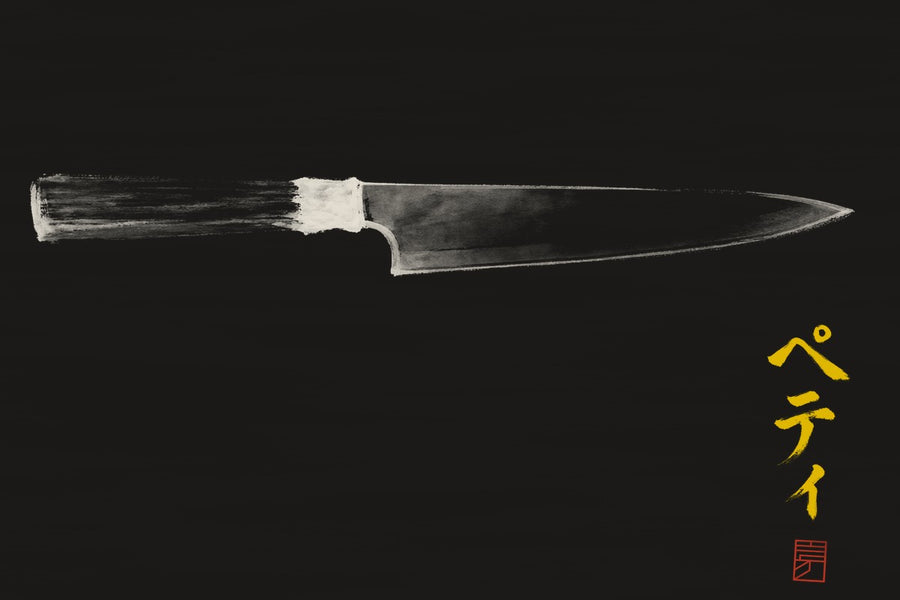
Petty — knife profile
Profile

Petty

ペティ

Utility knife · Double bevel

Small, slim double-bevel utility knife for peeling, trimming and small board jobs.

Read more
Steel properties
  1. Hardness Good
  2. Edge retention Good
  3. Toughness Good
  4. Rust resistance High
  5. Ease of sharpening Good
  6. Sharpness Good
Our ratings, inferred from published lab tests and composition.

Our edge-retention grade is a kitchen rating. It weighs the hardness each steel is sold at, which keeps a thin edge from rolling, twice as heavily as lab wear tests, and the final grade is our judgment from selling and sharpening these knives for over a decade. Lab card-cutting tests measure abrasive wear only, so they can rank carbon steels lower. Tap ? for the lab figure.

Steel

VG-MAX

Stainless

Shun's own steel, built on the VG10 formula, per Kai USA; we list Shun Classic and Premier knives in it.

Read more
CladdingCoreClad line
Construction

Sanmai - Stainless Damascus Clad

三枚ダマスカス

3 layers · damascus clad

Hard core between stainless damascus layers, bare at the edge. Thinning wears the pattern.

Read more
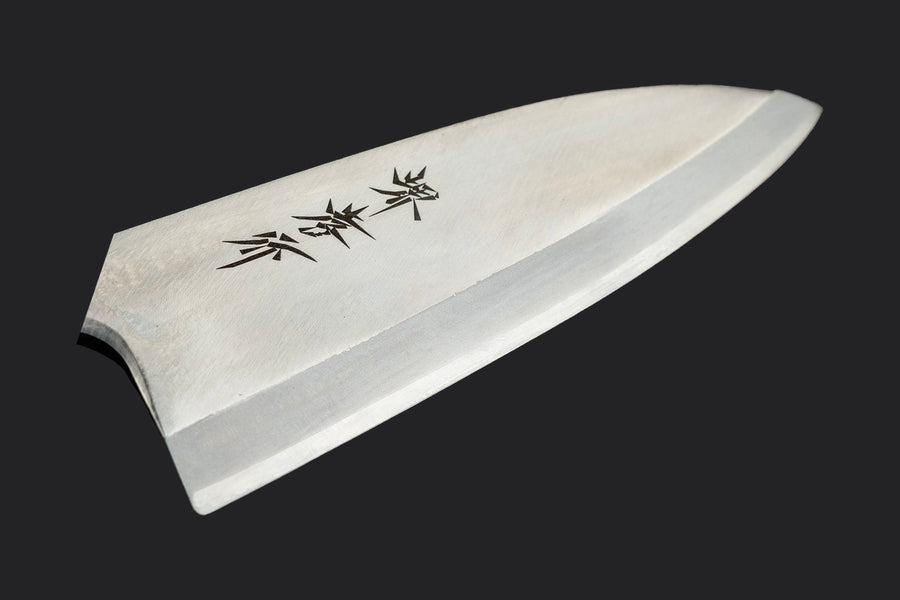
Migaki — blade surface finish
Finish

Migaki

磨き

Polished satin

Smooth polished surface, satin to soft sheen rather than mirror. Scratches show.

Read more
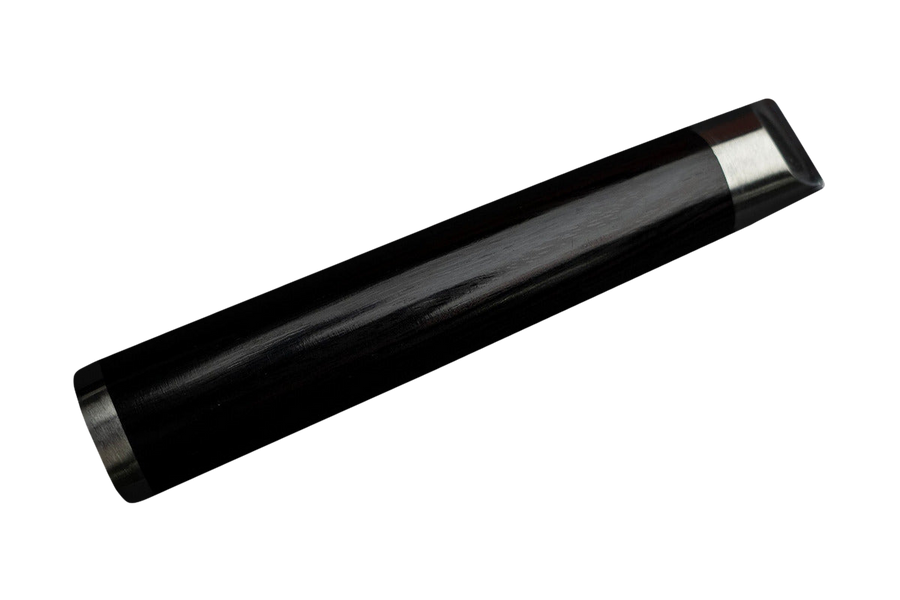
D-shaped Pakkawood handle
Handle

D-shaped Pakkawood

D Shape WA

Shun Classic D-section pakka wood, resin-infused and water-resistant. The D is handed.

Frequently asked questions

What is a petty knife and when do I need one?

A petty is a small utility knife, from the French petit. It is commonly shaped like a small gyuto and runs from 120 to 150 mm, up to 180 mm. Its clearest role is detailed work where a larger knife feels cumbersome: fruit peeling, garnish work, condiments, and small board work beside a gyuto or santoku.

A knife maker, Tojiro, frames the petty as a useful second knife, not an automatic necessity, and recommends santoku plus petty or gyuto plus petty combinations. It is not a replacement for a full size chef's knife; it lacks the blade length and belly for efficient chopping, rocking, or breaking down larger proteins. Treat it as a precision tool, not an all-rounder.

How long is a petty knife?

Petty knife lengths vary by maker: KAI's guide defines a petty (ペティナイフ) as a small knife with a narrow blade measuring 150 mm or under. Its table gives 90 to 150 mm, and it describes the shape as a smaller gyuto with a pointed tip.

We list petty knives from 70 mm to 165 mm, including lengths above the limit used in KAI's guide.

What is a good second Japanese knife after a gyuto?

For most cooks the second knife after a gyuto is a small utility knife (petty) of about 150mm. If most of your cooking is vegetables, make it a vegetable knife (nakiri) instead; if you carve or slice a lot of meat or fish, a slicing knife (sujihiki).

A gyuto covers the main board work, so the gap it leaves is small work. A petty does the jobs where a full-size blade is clumsy: peeling, trimming and coring in the hand, and small board jobs such as shallots, fruit and herbs. Our petty knife FAQ covers the shape in detail.

A nakiri earns the second slot if you prep vegetables every day. Its flat edge meets the board along its whole length, so slices separate cleanly. It has no pointed tip, so the gyuto still does the tip work.

A sujihiki is the choice for carving roasts and portioning large pieces of meat or fish. The long, narrow blade has less surface touching the food than a gyuto, so slices come away cleaner. 240mm and 270mm are the popular lengths.

A santoku or a bunka is a weak second knife: both are all-purpose shapes that repeat what the gyuto does. If your gyuto already handles the small jobs comfortably, the second knife can wait, and a whetstone to keep the first one sharp is the better spend.

How is VG-MAX different from VG10?

KAI, the company behind Shun, says VG-MAX builds on the VG10 formula with more carbon for strength and durability, additional chromium for wear and corrosion resistance, and increased tungsten, which it says makes the steel very fine-grained so the edge can be extremely sharp.

KAI attributes corrosion resistance and strength to molybdenum, and impact resistance and carbide formation to vanadium. KAI uses VG-MAX in its Shun Classic and Premier series.

What steel is the Shun Classic?

KAI lists a VG-MAX cutting core, sharpened to a 16 degree angle.

Our line page lists the blade as sanmai with stainless Damascus cladding.

Is Shun made by KAI, and how is it different from Seki Magoroku?

Yes. KAI launched Shun in 2000, and its own history page calls it a premium knife (高級包丁). KAI traces its history to 1908, when Saijiro Endo began making pocket knives, and the company was established in Seki, Gifu, in 1920.

Seki Magoroku is also a KAI brand. KAI says it carries the craft and spirit of the swordsmith Seki no Magoroku into modern knifemaking, fused with KAI's own technology, and its top tier is the Master Line.

What is the Seki Magoroku Imayo line?

Imayo (いまよう) is a series inside KAI's Seki Magoroku line. KAI says its hammered tsuchime pattern gives a luxurious look, and that its high-hardness blade is finished with a three-step sharpening process for a sharp edge with long-lasting cutting performance.

It is one of the series on KAI's Seki Magoroku knives page.

Can Seki Magoroku knives go in the dishwasher?

We suggest keeping Seki Magoroku knives out of the dishwasher. Wash each knife by hand and dry it straight away.