Drag to spin · pinch or scroll to zoom

Sukenari  |  SKU: SKNR-BLUE2-US210

Sukenari Blue 2 Kanto Usuba 210mm, Ebony Spacer Handle

Sale price $565.00 Regular price $663.00

IMPORTANT: Carbon steel knives can rust or patina quickly if not cared for properly. They require regular cleaning, drying, and oiling. If you are unfamiliar with carbon steel maintenance, we recommend choosing a stainless steel option instead.

Availability

Goes well with

Detailed Specifications
Line Sukenari Blue Steel Single Bevel Migaki
Profile Usuba / Single-bevel vegetable knife
Bevel Type Single Bevel
Weight 296 g | 10.4 oz
Edge Length 199 mm | 7 53/64″
Heel Height 48 mm | 1 57/64″
Width @ Heel 4.0 mm | 5/32″
Width @ Mid 3.7 mm | 9/64″
Width @ 1cm from Tip 3.2 mm | 1/8″
Steel Blue 2 / Aogami #2 | Carbon
Blade Construction Nimai - Soft Iron Clad
Maker's hardening hardness 60 HRC or more
Surface Finish Migaki
Handle
Region Toyama
Best for
  • Pro chefs
  • Enthusiasts

World-wide shipping via DHL Express, 3 to 6 days (not available in the UK).


Traditional Single-Bevel Performance with Lasting Edge Retention

Forged in Toyama, Japan, the Sukenari Blue Steel Single Bevel Migaki series combines traditional Japanese blade geometry with the dependable performance of Blue Steel carbon steel.

Blue Steel is highly regarded for its excellent balance of sharpness, edge retention and sharpening response. Its alloyed carbon steel composition allows it to take a very keen edge while maintaining that sharpness through extended use, making it particularly well suited to professional kitchens and experienced users who value consistent cutting performance.

The traditional single-bevel geometry provides precise control, clean slicing and highly accurate cuts, making the series ideal for sashimi, fish preparation and other detailed Japanese kitchen work. A smooth Migaki polished finish gives the blade a clean, understated appearance that complements its professional character.

Backed by Sukenari’s established craftsmanship, this line offers a refined balance of sharpness, durability and traditional Japanese performance.


Pros Cons
  • Excellent performance
  • Great for professionals
  • Need extra care
  • A little bit brittle
Care Instruction
  1. Don't cut hard things! Japanese knives are brittle so bone hacking is a NO NO!
  2. Wash with neutral detergent after use, and wipe dry;
  3. Please don't wash knife with dishwasher, it will damage the wood handle;
  4. Be careful not to leave the knife close to a heat source for a long time;
  5. It is a lot more dangerous to cut with a blunt knife than a sharp knife!
  6. It is best to sharpen a Japanese knife regularly on a waterstone.
  7. Oil the (carbon) knife if storing for an extended period of time to prevent rust.

Sukenari

Sukenari, professional kitchen knives from Toyama

Sukenari Co. makes, sells and repairs professional kitchen knives in Fuchu-machi, Toyama City, under the registered mark 佑成. The company was founded in 1933.

The company's own greeting page explains the mark: its first character is written with the person radical and 右, meaning right, and carries the wish that these knives can become the cook's indispensable right arm.

Read more

A 2016 profile by TONIO, Toyama's industry support body, says the founder trained at an old-established Tokyo knife maker and opened the shop in his home region in November 1945, after a wartime evacuation there. Knife regions split forging, sharpening and handle fitting between specialists; that profile says Sukenari makes its knives start to finish under one roof, as that Tokyo house did. Its own site says craftsmen still make every stage by hand, one knife at a time.

The same profile credits Sukenari with honyaki in White 1, a very hard steel that is hard to work and that, it says, only a handful of makers in Japan can handle. It also describes know-how built for ZDP189, harder than White 1, and TONIO-backed forging trials, with metallurgy and measured heat treatment, that led to its ZDP189 wa-gyuto. The profile also tells of OEM work for other professional knife makers and wholesalers since the 2008 downturn. We first visited in April 2016, when Nobuo Hanaki, then president, showed us the forging.

On our August 2026 visit, Sukenari told us the family were originally honyaki smiths for Masamoto, so in the early days they made only honyaki. New smiths there still learn honyaki first, as the foundation of the craft. As they put it, most workshops do it the other way round.

We list ZDP-189 hairline gyuto, K-tip gyuto and santoku; ZDP-247 hairline or Damascus gyuto, K-tip gyuto, santoku and sujihiki; SG2 hairline or Damascus gyuto, K-tip gyuto, gyu-hiki and santoku; HAP40 slim K-tip gyuto and mirror polished yanagiba; VG XEOS Damascus gyuto; VG10 Damascus yanagiba; YXR7 petty; Aogami Super hairline gyu-hiki; Blue 2 deba, K-tip yanagiba and Kanto usuba; White 2 K-tip kiritsuke and K-tip yanagiba. We also list an SG2 honyaki yanagiba, including a K-tip, an SG2 nimai (two-layer) sakimaru takobiki, and VG XEOS nimai yanagiba and kiritsuke yanagiba.

“A Toyama maker of professional kitchen knives since 1933.”

Est. 1933 | 昭和8年
Known for Knives made start to finish under one roof
Website sukenari.jp Instagram @sukenari_official Read more about Sukenari

Sukenari · Toyama

Knife details

Usuba — knife profile
Profile

Usuba

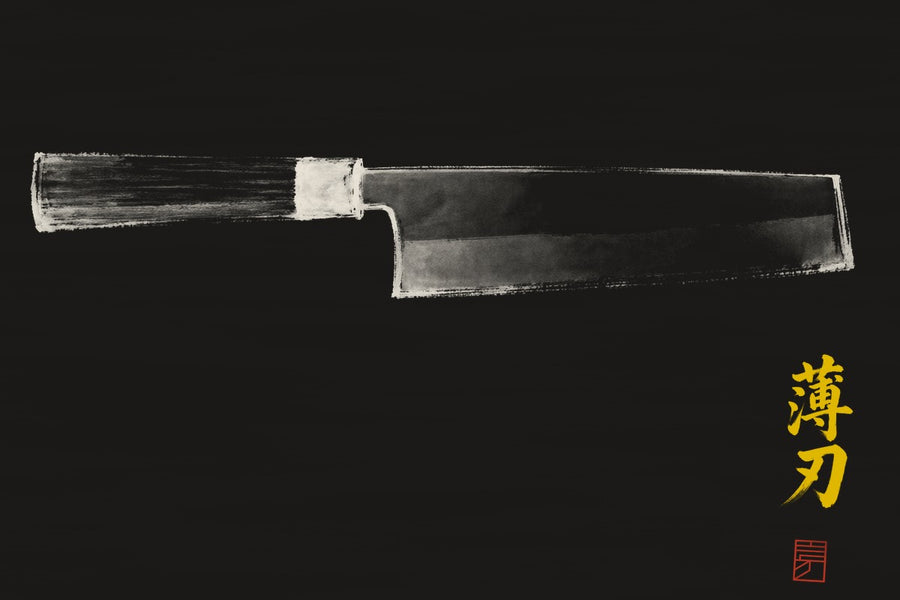
薄刃

Single-bevel vegetable knife · Single bevel

Thin, rectangular single-bevel vegetable knife; a Sakai maker says it cuts without breaking fibres.

Read more
Steel properties
  1. Hardness Very good
  2. Edge retention Very good
  3. Toughness Very good
  4. Rust resistance Low
  5. Ease of sharpening High
  6. Sharpness Very high
Our ratings, inferred from published lab tests and composition.

Our edge-retention grade is a kitchen rating. It weighs the hardness each steel is sold at, which keeps a thin edge from rolling, twice as heavily as lab wear tests, and the final grade is our judgment from selling and sharpening these knives for over a decade. Lab card-cutting tests measure abrasive wear only, so they can rank carbon steels lower. Tap ? for the lab figure.

Steel

Blue 2 / Aogami #2

青二鋼

Carbon · Hitachi Metals (now Proterial)

Proterial carbon steel, 1.05 to 1.15% carbon with chromium and tungsten; not stainless.

Read more
ShinogiCladdingClad lineHard steelHollow back
Construction

Nimai - Soft Iron Clad

二枚・軟鉄

2 layers · single bevel

Two layers, single bevel: hard steel on the back, soft iron elsewhere; it patinas.

Read more
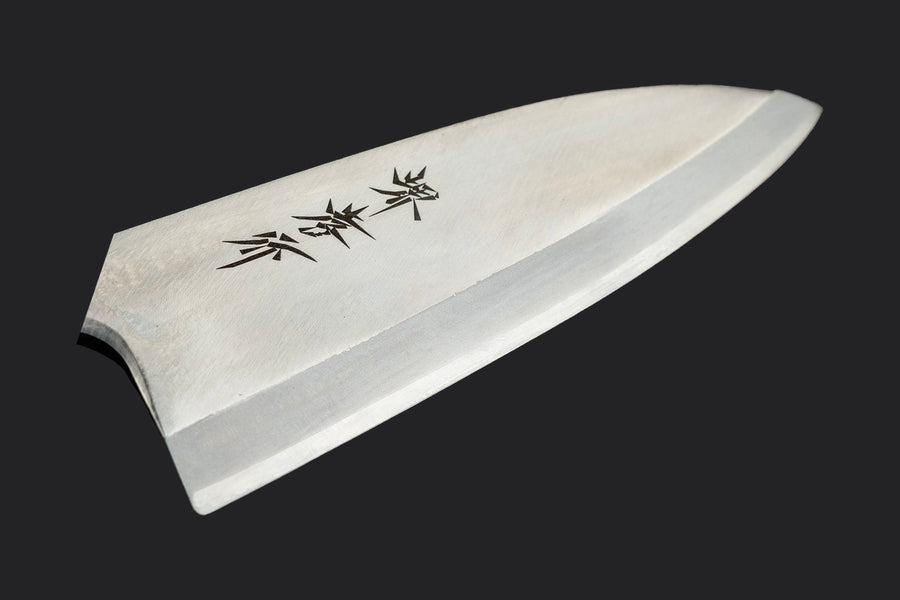
Migaki — blade surface finish
Finish

Migaki

磨き

Polished satin

Smooth polished surface, satin to soft sheen rather than mirror. Scratches show.

Read more

Frequently asked questions

What is an usuba used for?

An usuba (薄刃包丁) is for vegetables, and a knife maker's guide to Japanese knife shapes puts almost all vegetable preparation on this one blade.

The heel (刃元) peels and hollows out, while the middle of the edge does katsuramuki, fine garnish work, chopping and rounding off the cut edges of vegetables (面取). A Japanese dictionary describes the blade as single-bevel and rectangular, with spine and edge parallel and the same width at the heel and the tip.

Why is the back of a single-bevel knife hollow, and how do I sharpen it?

The shallow hollow in the back is called urasuki (裏スキ). Tojiro explains that it means the whole back never has to be ground when you sharpen, makes it easier to keep the back flat, and stops sharpening the back from affecting the edge. Only the thin flat rim around the hollow touches the stone.

Sharpen the front bevel first, laying it flat on the stone. Then lay the back completely flat and take a few light strokes, just enough to remove the burr. Never lift the spine to put an angle on the back, and keep the stone itself flat.

Bunka, nakiri or usuba: which knife is best for vegetables?

For everyday vegetable prep, a nakiri (菜切) is the simple choice. Tojiro describes it as Japan's own vegetable knife: a square, double-bevel blade, so it cuts the same way in either hand.

A bunka (文化) is a home knife that Tojiro describes as combining the good points of the nakiri and the gyuto. Choose it if you want one knife for vegetables plus meat and fish, with an angled tip.

An usuba (薄刃) is a knife made for vegetable preparation in Japanese cooking. It is single bevel, so it is made for one hand, and Tojiro lists its jobs as peeling and hollowing at the heel, and katsuramuki, fine garnish cuts and rounding off cut edges along the middle of the edge. Choose it if you want to learn those techniques.

Will a carbon steel knife rust, and how do I look after it?

Yes, carbon steels such as Aogami (Blue) and Shirogami (White) are not stainless steels, so left wet they can spot or rust.

Care is simple once it becomes habit. Wipe the blade as you go, especially after acidic food like citrus, tomato or onion. When you finish, wash it in warm water with a little soap and dry it straight away with a towel. Do not let it air dry, leave it in the sink or the dish rack, or put it in the dishwasher. Store it dry: on a magnetic strip or in a ventilated block in a dry spot.

If the knife will sit unused for a while, wipe on a thin layer of oil before storing. In our video James shows that mineral oil can stand in for camellia (tsubaki) oil, and he picks one labelled medical grade; we list the Kitchen Knife / Cutting Board Mineral Oil Medical Grade for this. If you find light rust, lift it with a rust eraser and a little water, then dry and oil the blade; we list the CKK and Naniwa rust erasers.

What is the difference between Blue 2 and White 2 steel?

Blue 2 is White 2 with tungsten and a little chromium added. Blue 2 holds its edge longer. White 2 sharpens faster and takes a very keen edge. Both are carbon steels that will rust if left wet.

The figures come from Proterial, which makes both. Each has 1.05 to 1.15% carbon. Blue 2 (Aogami 2) adds 1.00 to 1.50% tungsten and 0.20 to 0.50% chromium. White 2 (Shirogami 2) lists neither, and Proterial describes it as a carbon steel with minimum impurities. Proterial says the tungsten and chromium improve heat treatment and wear resistance, and gives a hardening hardness over 60 HRC for both.

In use, the tungsten forms hard carbides that resist wear, so a Blue 2 edge lasts longer between sharpenings. White 2 has none, so it comes back on a whetstone very quickly. The chromium in Blue 2 is far below the 10.5% a steel needs to be stainless, so it gives no real rust protection. Wipe either steel dry after use and expect a patina.

Choose Blue 2 if you want to sharpen less often. Choose White 2 if you enjoy sharpening and want the keenest edge. We list both widely: Blue 2 from Nigara, Myojin Riki and Anryu, and White 2 from Masamoto Sohonten, Sakai Takayuki and Yoshikane.

Is it Sukenari or 佑成?

Sukenari's own site carries both names together, titled the official site of 株式会社スケナリ with 佑成 named as a registered trademark. 佑成 is the house mark that appears on the blades.

So one house answers to both names: Sukenari is the company, 株式会社スケナリ, working from Fuchu machi in Toyama City, and 佑成 is its mark on the steel.

Are Sukenari knives handmade?

Yes. Sukenari says its knives are made by craftsmen by hand, one at a time, at its workshop in Fuchu machi, Toyama City.

The Sukenari lines we stock carry the workshop name in their titles.

What does the Sukenari mark 佑成 mean?

The workshop says the 佑 of its registered mark 佑成 (read Sukenari) is written with the person radical and 右, right, and that the character carries the wish for its tools to become the cook's indispensable right arm.

The company's own site title reads 登録商標 佑成 (registered trademark), and 佑成 is the house mark on its blades.

You May Also Like