Takeshi Saji  |  SKU: TAKE-V10RB-BU165-SAYA

Takeshi Saji VG10 Rainbow Damascus Bunka 165mm Ebony Handle Mosaic Pin

Sale price $508.00 Regular price $596.00

Pickup in Australia only

In Stock Now

Availability

Goes well with

Detailed Specifications
Line Takeshi Saji VG10 Rainbow Damascus Diamond Polish
Profile Bunka / K-tip santoku
Bevel Type Double Bevel
Weight 142 g | 5.0 oz
Edge Length 163 mm | 6 27/64″
Heel Height 46 mm | 1 13/16″
Width @ Heel 2.0 mm | 5/64″
Width @ Mid 1.9 mm | 5/64″
Width @ 1cm from Tip 1.0 mm | 3/64″
Steel VG10 | Stainless
Blade Construction Sanmai - Stainless Damascus Clad
Maker's hardening hardness 60 HRC or more
Surface Finish Migaki
Handle Ebony Mosaic
Region Takefu
Best for
  • Pro chefs
  • Enthusiasts

World-wide shipping via DHL Express, 3 to 6 days (not available in the UK).


Takeshi Saji’s VG10 Rainbow Damascus was a unique creation at its time, being one of the first makers who took advantage of the copper/brass laminated VG10 billet, Saji could create these knives with a stunning look and great practicality. 

The surface finish of these blades are rather simple, there isn't any etching or sandblasting that used to increase the contrast between the steel, copper and brass, and the polish just left the texture of the damascus on the surface. This finish is named “Diamond Migaki” and it has been used by Saji extensively in his SG2 Damascus lineup. We found this is a particularly good finish for the cutting smoothness as there is very little friction and sticking due to the combination of low evenness and high smoothness.

As for the geometry itself, these knives still hold up their standard as a Takeshi Saji knife, the spine is on the thinner side and it comes down to the edge that has almost no thickness in a slight convex grind. This design has been proven as one the smoothest cutting geometry and when paired with the aforementioned Migaki finish, can guarantee you a very pleasing experience when preparing your next meal.

For a knife with great performance and great look forged by a rather famous blacksmith, this VG10 line does come in at a relatively high price point. For the same price, you could easily find some other options with better steel like SG2. I would recommend this line to those who truly love beautiful and unique items, and are willing to pay a little extra for a work by a legendary blacksmith.

Pros Cons
  • Excellent performance
  • Great artistic
  • Thin behind the edge
  • High budget
Care Instruction
  1. Don't cut hard things! Japanese knives are brittle so bone hacking is a NO NO!
  2. Wash with neutral detergent after use, and wipe dry;
  3. Please don't wash knife with dishwasher, it will damage the wood handle;
  4. Be careful not to leave the knife close to a heat source for a long time;
  5. It is a lot more dangerous to cut with a blunt knife than a sharp knife!
  6. It is best to sharpen a Japanese knife regularly on a waterstone.

Takeshi Saji

Takeshi Saji (佐治 武士), Saji Uchihamono, Echizen

Takeshi Saji (佐治 武士) is an Echizen smith and the third generation of Saji Uchihamono (佐治打刃物), a company founded in 1916 and a member of Takefu Knife Village. He is a certified traditional craftsman (伝統工芸士), and the Village calls him a pioneer of Japanese-style knives built on traditional techniques.

We stock his SG2 and VG10 damascus knives, his SRS13 knives and his maki-e lacquered VG10W knives, with handles that include ironwood, stag and turquoise.

Read more

According to Takefu Knife Village, Saji still goes to exhibitions and abroad himself, taking in new ideas and making new pieces. The Village lists what the family company makes: Japanese-style knives, custom knives, forged kitchen knives of various kinds, and nata, the Japanese hatchet.

Among the damascus knives we carry from Saji are black and diamond damascus in SG2, and rainbow damascus in VG10.

“Third generation of Saji Uchihamono, an Echizen knife company founded in 1916.”

Est. 1916 | 大正5年
Known for Japanese-style knives and damascus kitchen knives
Instagram @takeshi_saji Read more about Takeshi Saji

Takeshi Saji · Takefu

Knife details

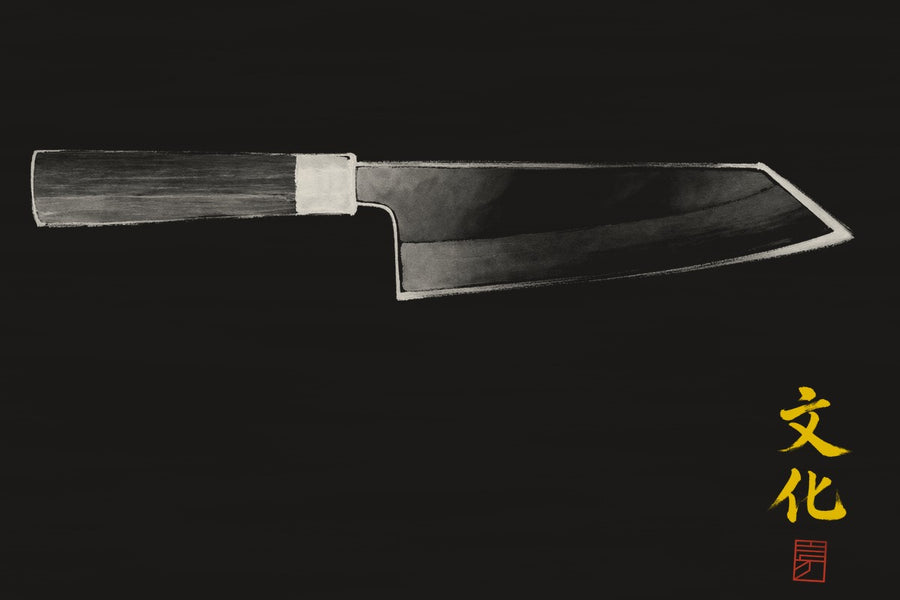
Bunka — knife profile
Profile

Bunka

文化

K-tip santoku · Double bevel

A compact all-rounder like a santoku; a Sakai maker says its angled K-tip suits fine work.

Read more
Steel properties
  1. Hardness Good
  2. Edge retention Good
  3. Toughness Good
  4. Rust resistance High
  5. Ease of sharpening Good
  6. Sharpness Good
Our ratings, inferred from published lab tests and composition.

Our edge-retention grade is a kitchen rating. It weighs the hardness each steel is sold at, which keeps a thin edge from rolling, twice as heavily as lab wear tests, and the final grade is our judgment from selling and sharpening these knives for over a decade. Lab card-cutting tests measure abrasive wear only, so they can rank carbon steels lower. Tap ? for the lab figure.

Steel

VG10

V金10

Stainless · Takefu Special Steel

Takefu stainless, 1% carbon, 15% chromium, 1.55% cobalt. Easy to sharpen.

Read more
CladdingCoreClad line
Construction

Sanmai - Stainless Damascus Clad

三枚ダマスカス

3 layers · damascus clad

Hard core between stainless damascus layers, bare at the edge. Thinning wears the pattern.

Read more
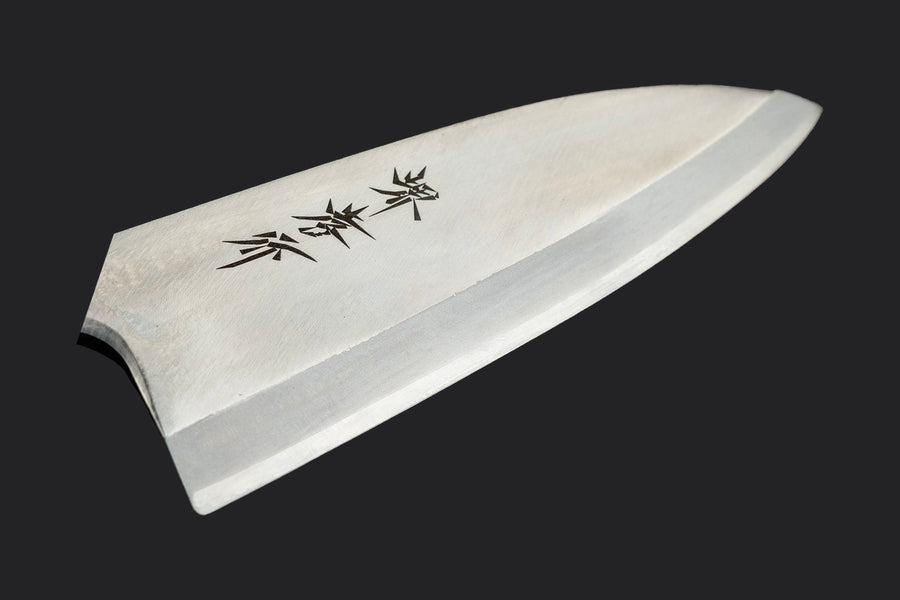
Migaki — blade surface finish
Finish

Migaki

磨き

Polished satin

Smooth polished surface, satin to soft sheen rather than mirror. Scratches show.

Read more
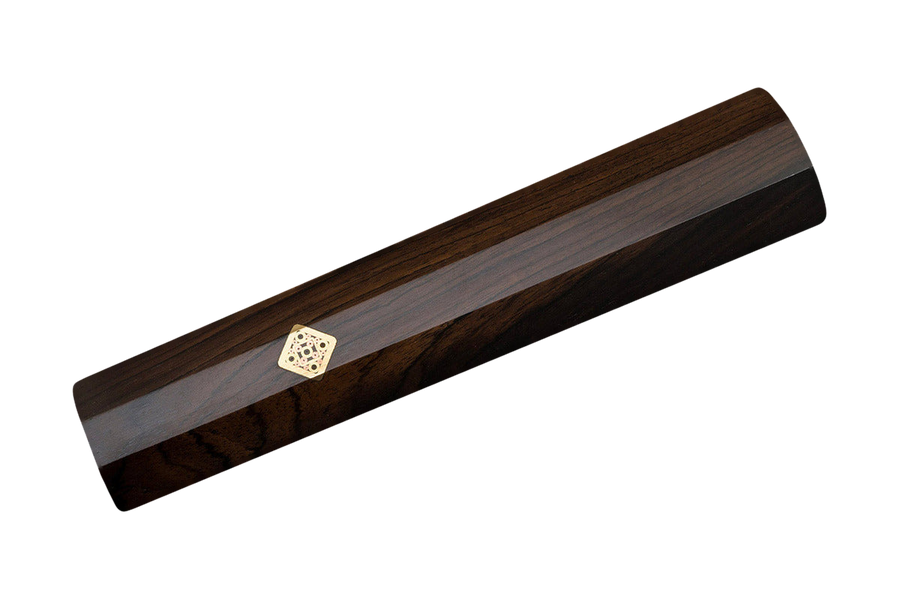
Ebony Mosaic handle
Handle

Ebony Mosaic

Octagonal WA

Flat, tapered octagonal ebony in Tsukiji Masamoto style with a centre square mosaic pin.

Frequently asked questions

Why is it called a bunka knife?

The bunka knife (文化包丁) takes its name from bunka, culture. A Sakai knife maker ties the name to Japan's modernisation, when Western culture and Japanese tradition merged, and says it stands for that new era and for the knife's wide range of uses.

The same maker says that as diets broadened to meat, fish and vegetables, an all-purpose knife was wanted, and the bunka took features from both Japanese and Western knives.

What is the difference between a bunka and a santoku?

The tip. One Japanese knife maker describes the bunka (文化包丁, kengata) as combining the good points of the gyuto and the nakiri with the tip cut at an angle, and the santoku as coming after it, by rounding that tip.

Both are all-purpose knives for the home; santoku (三徳) means three virtues, for the three foods it cuts: meat, fish and vegetables.

Bunka, nakiri or usuba: which knife is best for vegetables?

For everyday vegetable prep, a nakiri (菜切) is the simple choice. Tojiro describes it as Japan's own vegetable knife: a square, double-bevel blade, so it cuts the same way in either hand.

A bunka (文化) is a home knife that Tojiro describes as combining the good points of the nakiri and the gyuto. Choose it if you want one knife for vegetables plus meat and fish, with an angled tip.

An usuba (薄刃) is a knife made for vegetable preparation in Japanese cooking. It is single bevel, so it is made for one hand, and Tojiro lists its jobs as peeling and hollowing at the heel, and katsuramuki, fine garnish cuts and rounding off cut edges along the middle of the edge. Choose it if you want to learn those techniques.

Does VG10 rust?

Yes, it can. Takefu, which makes VG10 (V金10), lists it among its stainless steels, and the JSSA notes that stainless strictly means rust-resistant, not rust-proof.

Takefu lists VG10's chromium content as 15% and describes its corrosion resistance as excellent. We recommend drying the knife after washing.

How hard is VG10?

Takefu, the steelmaker behind VG10, gives HRC 60 or more as its hardening hardness, measured straight after quenching. The hardness of a finished knife depends on its maker.

Takefu says the steel's 15% chromium, 1% molybdenum and 1.55% cobalt give it high hardness and a long-lasting edge, and that it is easy to sharpen.

What is the difference between VG10 and SG2?

Both are Takefu blade steels, and they differ in class and in what Takefu publishes about each. Takefu lists VG10 as a stainless steel with 1.00% carbon, 15.00% chromium, 1.00% molybdenum, 0.25% vanadium and 1.55% cobalt, at a hardening hardness of HRC 60 or more.

Takefu describes SG2, its Super Gold 2, as a blade steel created by powder metallurgy, lists its composition as not disclosed, and SG2 runs 61 to 65 HRC depending on the maker. Takefu also calls SG2 a powdered stainless high-speed steel.

Is VG-10 a good steel for a first Japanese knife?

Yes. VG-10 is our default suggestion for a first Japanese knife, because it is stainless and easy to sharpen, and it holds a good working edge through everyday home cooking.

VG-10 is made by Takefu Special Steel, with about 1% carbon, 15% chromium and 1.55% cobalt, and is usually hardened to around 60 HRC. Takefu describes it as corrosion resistant and easy to sharpen. Day to day you rinse it and wipe it dry, with none of the rust watching carbon steel asks for.

It is also a kind steel to learn sharpening on. It takes an edge readily on a basic waterstone, so you can feel when your technique is working. A harder steel such as SG2 holds its edge longer but is less forgiving on the stone, as our VG-10 vs SG2 comparison explains.

Stainless steel can still stain: VG-10 will spot if it is left wet with acidic food on the edge, and it should never go in the dishwasher. Like any hard, thin Japanese edge, it should also stay away from bones, frozen food and glass boards. If your household is rough on knives, the slightly softer AUS-10 is the safer choice.

Steel is only part of the decision. Heat treatment and grind change how the same VG-10 cuts from one maker to the next, so choose the shape and size first. Our first Japanese knife guide walks through that.

Who is Takeshi Saji?

Takeshi Saji (佐治武士) is the third generation of Saji Uchihamono (株式会社佐治打刃物), the Echizen workshop founded in 1916.

The national register of traditional craftspersons lists him in the Echizen forged cutlery division, certified as a traditional craftsperson (伝統工芸士) on 25 February 1994. We carry a wide range of his work.