Tojiro  |  SKU: TOJI_F1055_DE180

Tojiro MV Stainless Deba 180mm F-1055

Sale price $163.00 Regular price $191.00

Pickup in Australia only

In Stock Now

Availability

Goes well with

Detailed Specifications
Line Tojiro MV Single bevel
Profile Deba / Japanese fish knife
Bevel Type Single Bevel
Weight 275 g | 9.7 oz
Edge Length 180 mm | 7 3/32″
Steel MV (Molybdenum Vanadium) | Stainless
Blade Construction Nimai - Stainless Clad
Typical hardness 54 to 60 HRC
Surface Finish Kasumi
Handle D Shaped Ho Wood Black Ferrule
Region Tsubame
Best for
  • First-timers
  • Students

World-wide shipping via DHL Express, 3 to 6 days (not available in the UK).


The Tojiro MV series single bevel blades aimed clearly at the entry level market. At a very affordable price, you can get a decently built single bevel knife with proper hollow grind and sandblast Kasumi blade, while being hassle free as the blade is stainless. The combination of these features have already made this line a unique product at this price, and I found it hard to find a comparable product.

The MV in the name refers to Molybdenum and Vanadium, two alloying elements that have various effect to the properties of the steel. The addition of these two elements are mainly for more wear resistance, allowing a longer lasting sharpness. But since MV steel is a generic term and the specific grad of the steel is not clear, I would only assume this is a entry to intermediate level steel considering the price of this line.

Who would need these knives? I believe mostly entry level chef who want a single bevel knife but runs a busy kitchen, the stainless nature of this line stands out as there are not much maintenance required. Or if you are a home cook, who happens to be interested in making sushi and fish butchering with deba, Tojiro MV will make a good way to get into the traditional single bevel knife without investing a load of cash into a carbon steel blade.

Pros Cons
  • Budget friendly
  • Easy to look after
  • Ideal for the household
  • Fit and finish can be improved
Care Instruction
  1. Don't cut hard things! Japanese knives are brittle so bone hacking is a NO NO!
  2. Wash with neutral detergent after use, and wipe dry;
  3. Please don't wash knife with dishwasher, it will damage the wood handle;
  4. Be careful not to leave the knife close to a heat source for a long time;
  5. It is a lot more dangerous to cut with a blunt knife than a sharp knife!
  6. It is best to sharpen a Japanese knife regularly on a waterstone.

Tojiro

Tojiro (藤次郎), Tsubame, Niigata

Tojiro (藤次郎株式会社) is a knife maker in Tsubame, Niigata, founded on 1 May 1953. Its president's message says that since its founding the company has pursued sharpness, the basic quality of a knife, carrying on traditional techniques while taking on new ones.

Read more

We stock Tojiro's DP3 knives in shapes from a paring knife to a sujihiki, its Zen series, its SG2 powdered steel gyuto and santoku, and its MV stainless deba and yanagiba, along with some of its kitchen tools.

“Tsubame knife maker since 1953.”

Est. 1953 | 昭和28年
Known for The DP, Zen and SG2 knife lines
Website tojiro-japan.com Instagram @tojiro_jp Read more about Tojiro

Tojiro · Tsubame

Knife details

Deba — knife profile
Profile

Deba

出刃

Japanese fish knife · Single or double bevel

A thick, heavy fish knife; dictionaries say it fillets and cuts fish and fowl bones.

Read more
Steel properties
  1. Hardness Low
  2. Edge retention Low
  3. Toughness Good
  4. Rust resistance High
  5. Ease of sharpening High
  6. Sharpness Good
Our ratings, inferred from published lab tests and composition.

Our edge-retention grade is a kitchen rating. It weighs the hardness each steel is sold at, which keeps a thin edge from rolling, twice as heavily as lab wear tests, and the final grade is our judgment from selling and sharpening these knives for over a decade. Lab card-cutting tests measure abrasive wear only, so they can rank carbon steels lower. Tap ? for the lab figure.

Steel

MV (Molybdenum Vanadium)

モリブデンバナジウム鋼

Stainless

We list MV steel knives from Masamoto Sohonten, Tojiro, KAI and Sakai Takayuki.

Read more
ShinogiCladdingClad lineHard steelHollow back
Construction

Nimai - Stainless Clad

二枚・ステンレス

2 layers · single bevel

Two layers, single bevel: hard steel on the back, stainless cladding over the other.

Read more
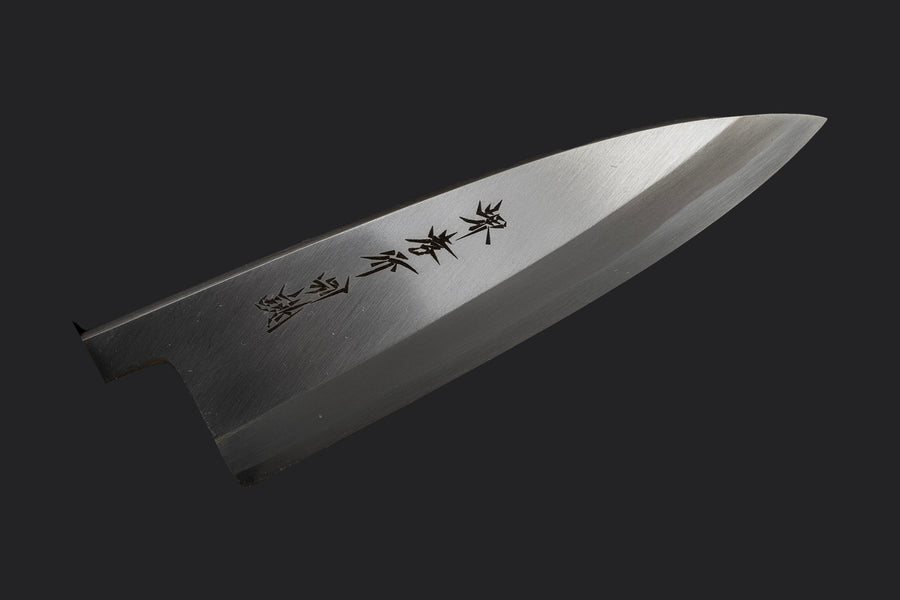
Kasumi — blade surface finish
Finish

Kasumi

霞

Misty polish

Hazy, matte bevel where soft iron meets hard core steel. The iron patinas and rusts.

Read more
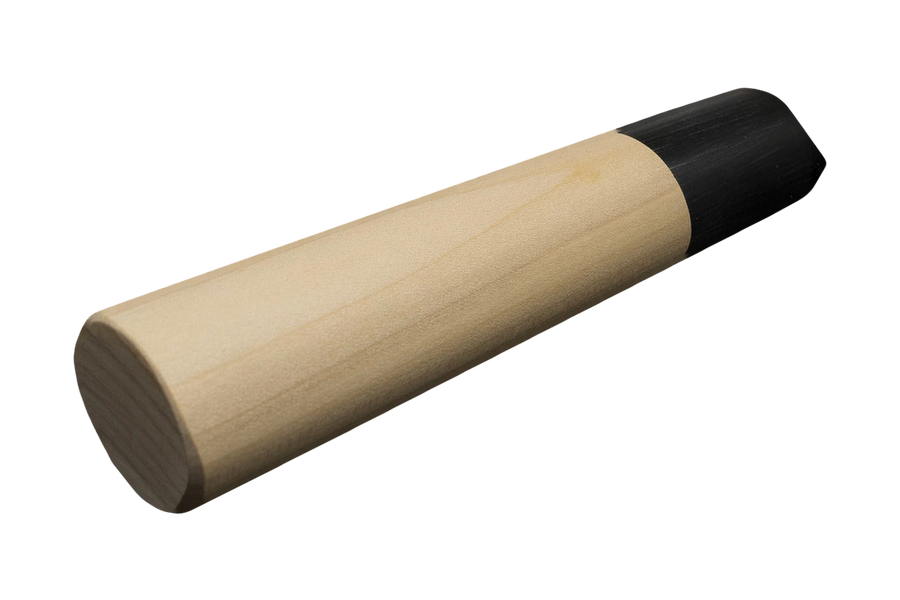
D Shaped Ho Wood Black Ferrule handle
Handle

D Shaped Ho Wood Black Ferrule

D Shape WA

Pale ho wood, D-section wa, with a black buffalo horn ferrule. The D is handed; check fit.

Frequently asked questions

Can a deba cut bone?

Yes, the bones of fish and fowl. Japanese dictionaries describe the deba (出刃包丁) as wide, thick-spined and heavy, used to fillet fish, to cut fish and fowl bone and all, and for rough chopping.

When you chop bone, use the heel of the blade (刃元), the Sakai cutlery association says. It is a fish and poultry knife, not a cleaver.

Can left-handed cooks use single bevel knives?

A standard single bevel knife is ground for right-handed use, and a left-handed one is made with the bevel reversed. Some makers offer left-handed versions.

Contact us and we will check what we can order or have in stock.

What is a mioroshi deba?

A mioroshi deba is a longer, slimmer version of the Japanese fish-butchering knife (deba), made for filleting. It keeps the deba's single bevel but is narrower, thinner at the spine and much lighter for its length.

A standard deba is thick and heavy, deep at the heel, and typically 150mm to 210mm long. Its weight and thick spine do the work when you take off a head or cut through a spine. The mioroshi deba gives up some of that weight for length: the ones we list are 210mm, 240mm and 270mm.

Our measurements show the difference. In Masamoto Sohonten's KS line, the 210mm mioroshi deba weighs 209g against 382g for the 210mm deba, and its spine above the heel is 4.8mm thick against 7.1mm.

Like the deba it is single bevel, so each knife is made for one hand. Most are right-handed, and we list left-handed ones too. Ours come from Sakai Takayuki, Masamoto Sohonten, Nakagawa and the Hatsukokoro Shirasagi line, in White 2 and Blue 1 carbon steel and in stainless.

Choose the standard deba if most of your work is heads and spines, because that work needs the weight. Choose the mioroshi deba when filleting is most of the job. Our deba guide explains the family, and both are listed with our deba and fish filleting knives.

Why is the back of a single-bevel knife hollow, and how do I sharpen it?

The shallow hollow in the back is called urasuki (裏スキ). Tojiro explains that it means the whole back never has to be ground when you sharpen, makes it easier to keep the back flat, and stops sharpening the back from affecting the edge. Only the thin flat rim around the hollow touches the stone.

Sharpen the front bevel first, laying it flat on the stone. Then lay the back completely flat and take a few light strokes, just enough to remove the burr. Never lift the spine to put an angle on the back, and keep the stone itself flat.

Which knife do I need for sushi and sashimi at home?

For occasional sushi at home, a sharp sujihiki (筋引) does the job. Tojiro describes it as a long, double-bevel slicer that can also be used for sashimi, and a double bevel works in either hand.

If sashimi is the point of the meal, choose a yanagiba (柳刃). Tojiro calls it the Kansai-style sashimi knife, now used across Japan, and it slices in one long pull from heel to tip. It is single bevel, so buy the one made for your hand.

If you start from whole fish, add a deba (出刃). Tojiro describes it as very thick and heavy, made for breaking fish down. The deba takes the fish apart and the slicer then cuts the fillets.

Are Tojiro knives worth it?

We think so. Tojiro has made knives in Tsubame, Niigata, since 1953, and its president's message says the company has pursued sharpness, the basic quality of a knife, since its founding.

Tojiro describes its DP knives, its CLASSIC series, as a VG10 core with 13-chrome stainless steel on the sides, and its Powdered Steel knives as a powdered high-speed steel core with the same stainless sides.

We list Tojiro Powdered Steel gyuto and santoku, a VG10 Damascus gyuto and chef's knife, a kurouchi tsuchime gyuto, and a DP3 yo-deba. Stock changes, so check each listing. The Tojiro maker page has more on the company.