Drag to spin · pinch or scroll to zoom

Iron Clad  |  SKU: SHIB-CMKT-SJ240

Shibata Koutetsu Chromax K-Tip Sujihiki 240mm

Sale price $430.00 Regular price $506.00

Pickup in Australia only

In Stock Now

Availability

Goes well with

Detailed Specifications
Line Shibata Koutetsu Chromax
Profile Sujihiki / Slicing knife
Bevel Type Double Bevel
Weight 116 g | 4.1 oz
Edge Length 238 mm | 9 3/8″
Heel Height 38 mm | 1 1/2″
Width @ Heel 1.9 mm | 5/64″
Width @ Mid 1.9 mm | 5/64″
Width @ 1cm from Tip 1.0 mm | 3/64″
Steel Chromax | Semi-stainless
Blade Construction Sanmai - Stainless Clad
Maker's hardening hardness 61 HRC or more
Surface Finish Migaki
Handle
Region Fukuyama
Best for
  • Pro chefs
  • Enthusiasts

World-wide shipping via DHL Express, 3 to 6 days (not available in the UK).


Master Shibata Takayuki’s Koutetsu(甲鉄, Ironclad) Chromax line embodies his motto: "Art Over Beauty." These ultra-thin lasers glide effortlessly through food, resisting stickage with their hazy, textured finish and a well tuned geometry. Every blade is hand-ground and sharpened by Shibata himself—ensuring insane sharpness and flawless finish.

The unique design choice Shibata made about this line is having Kiritsuke-style tip applied to all of the knives in the line, this design pays homage to Japan’s historic Koutetsu(Ironclad) warship—built for armour and power. Yet these knives are featherlight and agile, with a rather thin spine and even thinner bevel. The profile according to Shibata is designed to find the perfect balance in edge curvature between the dead flat Nakiri and curvy Gyuto - two of his favourite profiles that he likes and wants to improve upon. The gently curved edge on these knives you’d find can comfortably rock and slice in pulling motion like a Gyuto, but can also chop through ingredients with much less chance of bits connected like a Nakiri.

Shibata’s priority in performance shines on this line: almost every detail, from the surface finish to geometry, is aimed to have the lowest cutting resistance possible. The reduced thickness not only leads to a featherlight handling, but also minimises resistance when you wedge the knife into a very dense food. The usual downside for thin blades it, their bevels are generally flat, and there aren’t many steels that allow the maker to create a bulging convex/sudden change in geometry to encourage food release. However, Shibata with his extensive sharpening experience seems to have found an optimal convex shape that can achieve a noticeable level of food release, he also uses a more coarse Migaki(brushed) finish to further reduce the sticking. The Koutetsu line excels in all kinds of cutting tasks, yielding a super smooth cutting feeling in them. This isn’t just a knife—it’s a cutting masterpiece.

Supporting this design is the Chromax steel, a formula that has many names to it like V Gin 1, VS1, SKD/SKD12 or A2. As an alloy carbon steel, its original design intention as a tool steel gives it high toughness, high wear resistance and decent hardness, this is the foundation that allows Koutetsu to be built so thin, and produce a great cutting edge that performs very well especially on soft materials. This core steel is cladded between two pieces of plain stainless steel, almost blended into them after the brushed finish is applied. With no fancy Damascus cladding or surface treatment like etching or sandblasting, this finish sticks to the core of Shibata’s knifemaking philosophy: Art Over Beauty. But in all honesty, this extremely uniform finish when paired with mirror polished spine and choil, is a beauty by itself.

For those who prioritize performance, the Koutetsu delivers: razor-sharp, comfortable, and engineered to excel, this applies specially for professionals. Due to the thinner blade, Koutetsu would still maintain a low thickness behind the edge after a dozen times of sharpening, which means in intense use, it maintains its cutting performance even better. As this is a very hand made knife, if you happen to see one available in your desired profile, consider grabbing it as it doesn’t appear often.

Pros Cons
  • Excellent performance
  • Thin behind the edge
  • Great OOTB
  • Exceptional profile
  • Prone to rust
  • High budget
Care Instruction
  1. Don't cut hard things! Japanese knives are brittle so bone hacking is a NO NO!
  2. Wash with neutral detergent after use, and wipe dry;
  3. Please don't wash knife with dishwasher, it will damage the wood handle;
  4. Be careful not to leave the knife close to a heat source for a long time;
  5. It is a lot more dangerous to cut with a blunt knife than a sharp knife!
  6. It is best to sharpen a Japanese knife regularly on a waterstone.
  7. Semi-stainless steel won't rust easily but may still patina

Iron Clad

Iron Clad, Takayuki Shibata's company in Fukuyama

Iron Clad/Koutetsu is the made-in-house brand by Shibata Knives, bearing the motto “Art Over Beauty”, it’s a sharpening/grinding focus brand that known for its Hatsuke(刃付け, bevel-making) skill. The sharpener and leader Takayuki Shibata was the founder of Shibata Knives and other sister brands of Iron Clad, including the highly praised Masakage and the value-focused Tsunehisa.

The knife offered by Iron Clad are engraved with 崇行, which is Shibata’s first name Takayuki. Each Iron Clad knife is grinded by hand sharpening on rotary stone to produce the excellent geometry that Shibata-san developed through years of his experience on sharpening. These knives are generally referred as Koutetsu SG2/AS/Chromax, they share a similar profile, finished uniformly with Migaki finish and sharpened with Shibata’s unique differential grit sharpening technique to get a smooth yet bitey edge. The knives under the banner of Koutetsu are elegant and simple while great in performance, building Iron Clad a fame for its professional oriented designs.

“Takayuki Shibata's knife company in Fukuyama, behind the Koutetsu, Masakage and Tsunehisa brands.”

Est. 2009 | 平成21年
Known for Koutetsu knives, and the Masakage and Tsunehisa brands
Website shibataknives.com Instagram @knife_gallery.jp Read more about Iron Clad

Iron Clad · Fukuyama

Knife details

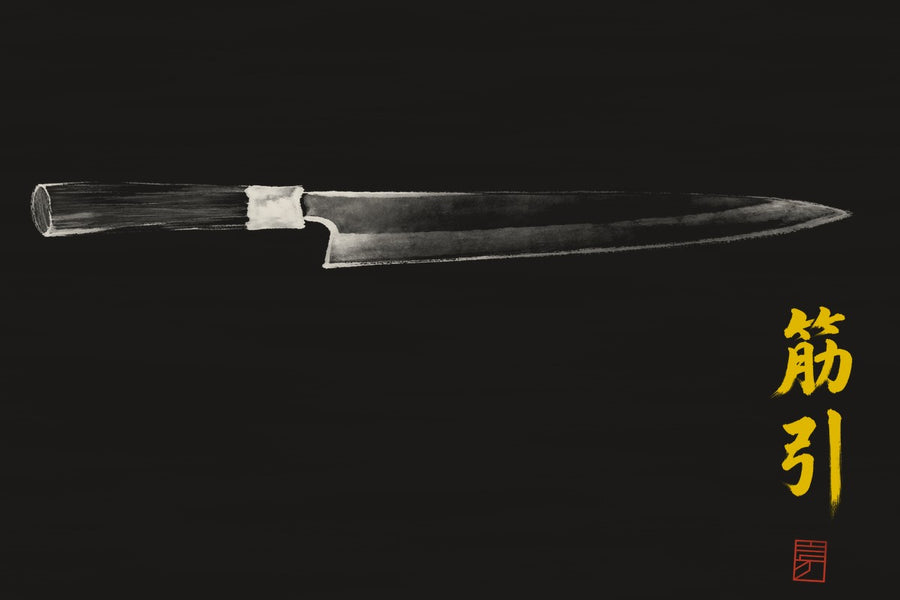
Sujihiki — knife profile
Profile

Sujihiki

筋引

Slicing knife · Double bevel

A long, narrow slicer for dividing large meat; Tojiro says it cuts sashimi too.

Read more
Steel properties
  1. Hardness Very good
  2. Edge retention Good
  3. Toughness Good
  4. Rust resistance Fair
  5. Ease of sharpening Good
  6. Sharpness Good
Our ratings, inferred from published lab tests and composition.

Our edge-retention grade is a kitchen rating. It weighs the hardness each steel is sold at, which keeps a thin edge from rolling, twice as heavily as lab wear tests, and the final grade is our judgment from selling and sharpening these knives for over a decade. Lab card-cutting tests measure abrasive wear only, so they can rank carbon steels lower. Tap ? for the lab figure.

Steel

Chromax

クロマックス鋼

Semi-stainless · Takefu Special Steel

Takefu semi-stainless, conventionally melted, 1% carbon, 5% chromium, hardening hardness 61 HRC or more. Easy to sharpen and tough.

Read more
CladdingCoreClad line
Construction

Sanmai - Stainless Clad

三枚

3 layers · stainless clad

Hard core between two stainless layers, bare only at the edge; the cladding resists rust.

Read more
Migaki — blade surface finish
Finish

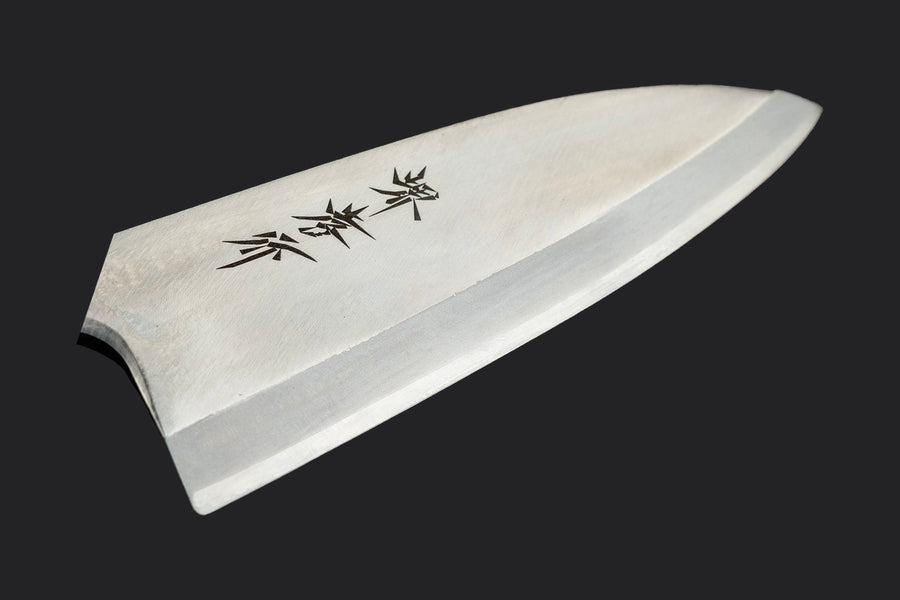
Migaki

磨き

Polished satin

Smooth polished surface, satin to soft sheen rather than mirror. Scratches show.

Read more

Frequently asked questions

What size sujihiki should I buy?

Between 210 and 270 mm, depending on where it will work. One Japanese maker lists 210 to 240 mm, double-bevel, for home use and 240 to 270 mm, single- or double-bevel, for professional kitchens.

Another, in Sakai, recommends 240 mm at home, with the size of your board in mind, and 270 mm for professional use.

Sujihiki or yanagiba: which do I need?

Most home cooks need the sujihiki. Choose the yanagiba when slicing raw fish for sashimi and sushi is the main job and you are prepared to learn single bevel sharpening.

A sujihiki is a long, narrow, double bevel slicer. Tojiro describes it as the knife for dividing large pieces of meat, known abroad as a slicer or carving knife, and says its length lets it cut sashimi as well. It carves roasts, trims sinew and portions fish, works in either hand and sharpens like any double bevel knife. Sujihiki run from about 210 to 300 mm, and 240 mm suits most home boards.

A yanagiba is the single bevel sashimi knife. It is ground on one side with a hollow back, and each slice is one long pull from heel to tip, so raw fish is cut cleanly rather than sawn. The edge is too fine for bones or anything hard. It is made for one hand and most are right handed, so check the listing if you are left handed. Sharpening means working the whole bevel and keeping the back flat. Yanagiba run from about 240 to 330 mm, with 270 and 300 mm the common sizes.

So for roasts, portioning meat and the occasional side of fish, buy a sujihiki. For regular sashimi and sushi work, buy a yanagiba and keep it for fish.

Which knife do I need for sushi and sashimi at home?

For occasional sushi at home, a sharp sujihiki (筋引) does the job. Tojiro describes it as a long, double-bevel slicer that can also be used for sashimi, and a double bevel works in either hand.

If sashimi is the point of the meal, choose a yanagiba (柳刃). Tojiro calls it the Kansai-style sashimi knife, now used across Japan, and it slices in one long pull from heel to tip. It is single bevel, so buy the one made for your hand.

If you start from whole fish, add a deba (出刃). Tojiro describes it as very thick and heavy, made for breaking fish down. The deba takes the fish apart and the slicer then cuts the fillets.

Is Chromax stainless?

Takefu calls Stainless Chromax a composite: one of its V-Gin1, Gin2 or V-Gin3B steels as the core, clad in soft stainless steel. Takefu lists those core steels as semi-stainless (セミステンレス系).

Takefu lists 4.50 to 5.50% chromium for V-Gin1, 7.00 to 8.00% for Gin2 and 6.00 to 7.00% for V-Gin3B, and says V-Gin1 resists corrosion far better than carbon steel. The Japan Stainless Steel Association defines stainless steel as having at least 10.5% chromium. We suggest drying the knife after washing.

What makes the Shibata Koutetsu shape different?

On his SG-2 Koutetsu page, Takayuki Shibata describes a sharp point for scoring vegetables, squid or chicken and a slightly curved edge that balances friction and contact with food.

He describes a mirror polished spine and rough sides, with the rough finish intended to minimise friction between food and blade. Our listings use the name Shibata Koutetsu Chromax.

Does Iron Clad sharpen its knives itself?

Yes, in part. Takayuki Shibata's own page for the Koutetsu line says of those knives, "we carefully sharpen them one by one."

From our own dealings with Iron Clad, he does the sharpening himself on knives that carry his name, though probably not on each one.

Iron Clad's company page lists resharpening among its business, with the export, maintenance and making of knives.

How can I tell sanmai, warikomi, damascus and honyaki apart?

Start with the line on the blade. On a clad knife, sanmai or warikomi, a hard steel core is joined to a softer cladding, and the join shows on the bevel. Tojiro says this is where the name kasumi (霞, haze) comes from: the hard steel takes a shine while the soft metal looks hazy.

A honyaki (本焼) is made of one steel. Before hardening the smith coats the parts that should stay softer with clay, so only the edge hardens fully, and the boundary can show as a hamon (刃文).

Damascus is a pattern made by forging many layers of different metals together and then bringing the pattern out with the finish. If it matters how a knife is built, ask before you buy. Our sanmai, warikomi and honyaki pages show each construction.