A 2016 profile by TONIO, Toyama's industry support body, says the founder trained at an old-established Tokyo knife maker and opened the shop in his home region in November 1945, after a wartime evacuation there. Knife regions split forging, sharpening and handle fitting between specialists; that profile says Sukenari makes its knives start to finish under one roof, as that Tokyo house did. Its own site says craftsmen still make every stage by hand, one knife at a time.
The same profile credits Sukenari with honyaki in White 1, a very hard steel that is hard to work and that, it says, only a handful of makers in Japan can handle. It also describes know-how built for ZDP189, harder than White 1, and TONIO-backed forging trials, with metallurgy and measured heat treatment, that led to its ZDP189 wa-gyuto. The profile also tells of OEM work for other professional knife makers and wholesalers since the 2008 downturn. We first visited in April 2016, when Nobuo Hanaki, then president, showed us the forging.
On our August 2026 visit, Sukenari told us the family were originally honyaki smiths for Masamoto, so in the early days they made only honyaki. New smiths there still learn honyaki first, as the foundation of the craft. As they put it, most workshops do it the other way round.
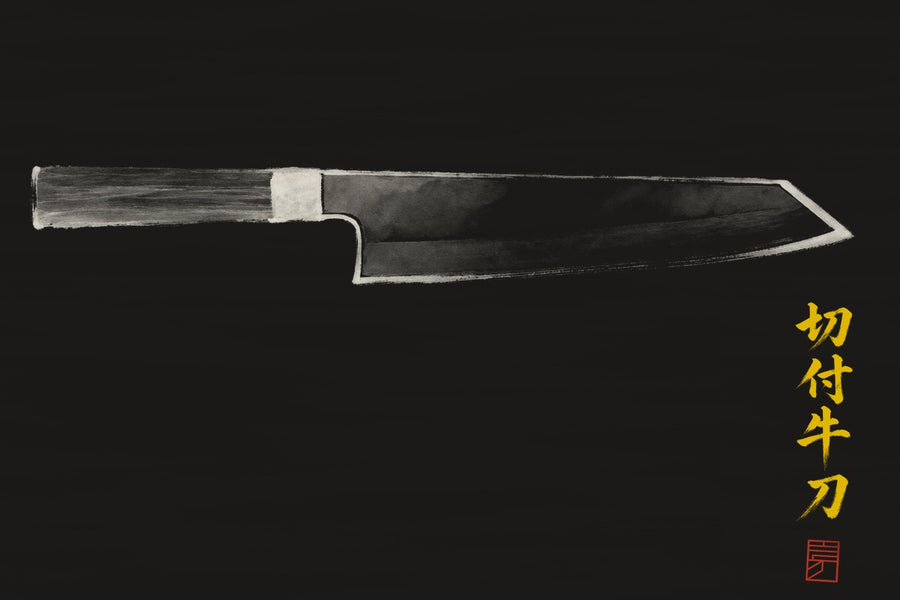
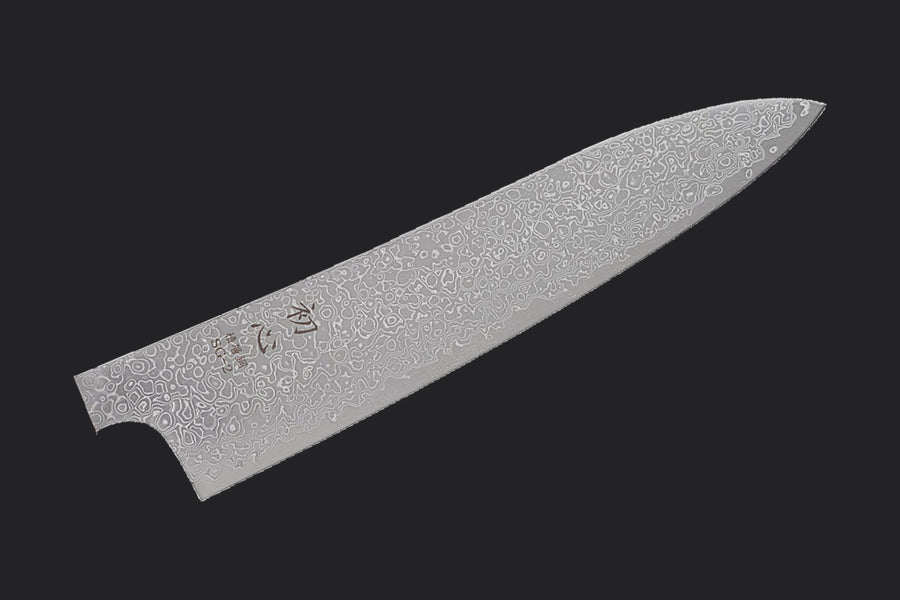
We list ZDP-189 hairline gyuto, K-tip gyuto and santoku; ZDP-247 hairline or Damascus gyuto, K-tip gyuto, santoku and sujihiki; SG2 hairline or Damascus gyuto, K-tip gyuto, gyu-hiki and santoku; HAP40 slim K-tip gyuto and mirror polished yanagiba; VG XEOS Damascus gyuto; VG10 Damascus yanagiba; YXR7 petty; Aogami Super hairline gyu-hiki; Blue 2 deba, K-tip yanagiba and Kanto usuba; White 2 K-tip kiritsuke and K-tip yanagiba. We also list an SG2 honyaki yanagiba, including a K-tip, an SG2 nimai (two-layer) sakimaru takobiki, and VG XEOS nimai yanagiba and kiritsuke yanagiba.