Drag to spin · pinch or scroll to zoom

Sukenari  |  SKU: SUKE_ZDP247HL_KGY240

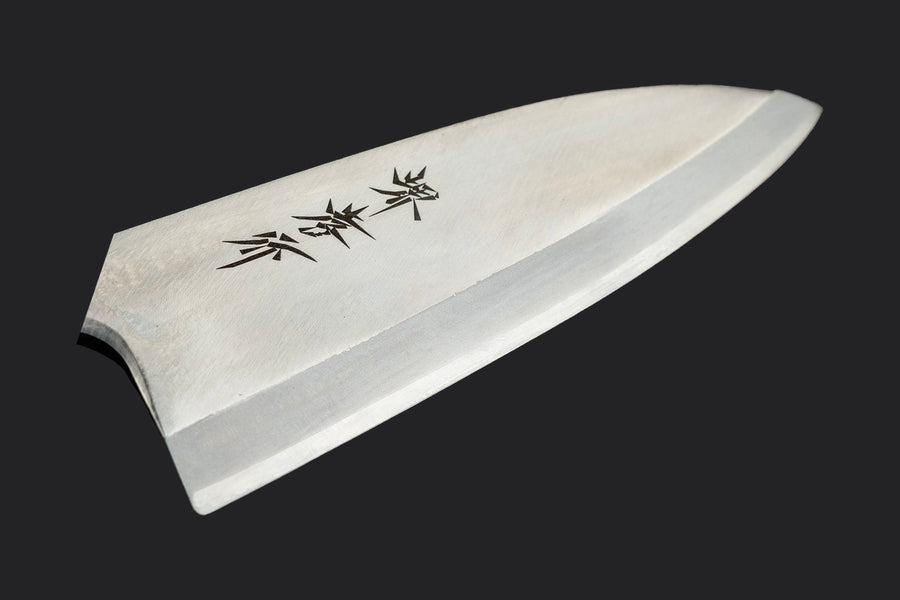
Sukenari ZDP-247 Hairline K-tip Gyuto 240mm, Ebony Handle

Sale price $564.00 Regular price $663.00

Pickup in Australia only

In Stock Now

Availability

Goes well with

Detailed Specifications
Line Sukenari ZDP-247 Hairline
Profile K-tip Gyuto / K-tip chef's knife
Bevel Type Double Bevel
Weight 223 g | 7.9 oz
Edge Length 235 mm | 9 1/4″
Heel Height 51 mm | 2 1/64″
Width @ Heel 2.6 mm | 7/64″
Width @ Mid 2.2 mm | 3/32″
Width @ 1cm from Tip 1.1 mm | 3/64″
Steel ZDP-247 | Powdered | Stainless
Blade Construction Sanmai - Stainless Clad
Typical hardness 63 to 64 HRC
Surface Finish Migaki
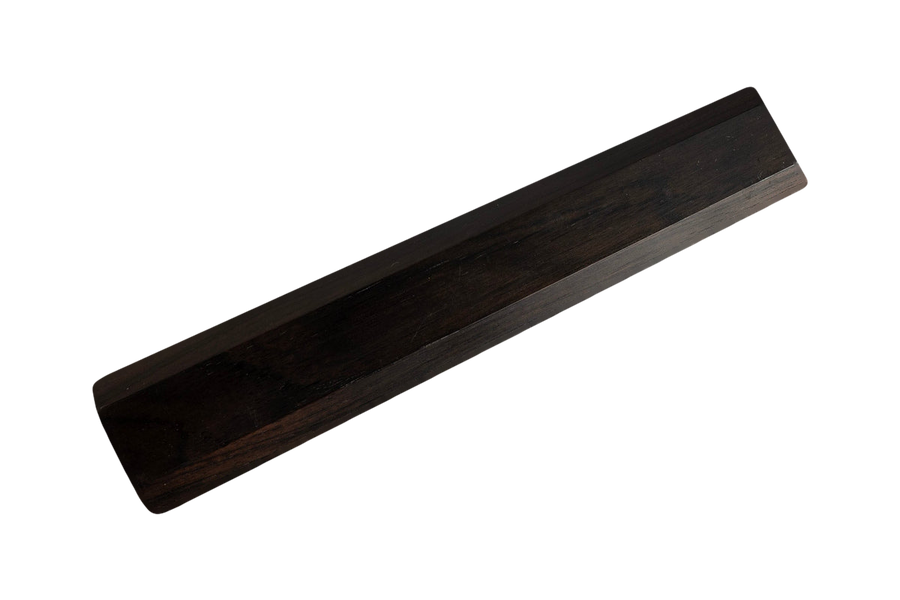
Handle Octagonal Ebony
Region Toyama
Best for
  • Enthusiasts
  • Collectors
  • Pro chefs

World-wide shipping via DHL Express, 3 to 6 days (not available in the UK).


Every few years Sukenari works a steel nobody else has bothered with. ZDP-189, HAP40, SRS-13, YXR7, and now ZDP-247. It is not a new alloy. It comes from the same Hitachi (now Proterial) ZDP family as ZDP-189. Murray Carter was working a ZDP-247 variant back in the early 2000s, and described it as a steel made for forging rather than grinding from a blank. The steel came out of Hitachi about thirty years ago, and Sanyo Riki, the mill that laminates Sukenari's billets, says roughly a ton of it is left. What is new is a production kitchen series, which Sukenari debuted in August 2026. As far as we can tell, we are one of the first shops anywhere to sell commercially available ZDP-247 kitchen knives from a reputable maker, and possibly the first.

Now the honest part. Sanyo Riki calls ZDP-247 a development grade, and the only thing we have been told about it is one line: powder stainless, heat-treat it like SRS-13. Proterial has never published a specification at all. So we cannot give you a carbon or chromium figure, because nobody outside Proterial has one.

What we can give you is how it cuts. Sukenari takes it to 63 to 64 HRC, a touch under where they run ZDP-189. It is a hard powder steel and it holds an edge like one: a long plateau, then a clear signal that it wants the stones. The surprise came on the stones themselves. We put the 247 and the 189 on the same ones, and the 247 gives up a burr without the fight. It still rewards a good stone. It is stainless on paper. So is ZDP-189, and that still spots if you leave it wet. Wipe it, keep it dry, and do not twist it through bone.

This is the Hairline: a stainless-clad san-mai with the ZDP-247 core between softer stainless layers, brushed rather than mirrored. Same construction and finish as the ZDP-189 Hairline that so many of you own, so the feel in hand and the thin grind behind the edge will be familiar. If you own the 189 and want the next chapter, this is it. If you are new to steels this hard, start with the ZDP-189 Hairline and come back for this one.

Pros Cons
  • Highly collectable
  • Excellent performance
  • Easy to look after
  • Need extra care
Care Instruction
  1. Don't cut hard things! Japanese knives are brittle so bone hacking is a NO NO!
  2. Wash with neutral detergent after use, and wipe dry;
  3. Please don't wash knife with dishwasher, it will damage the wood handle;
  4. Be careful not to leave the knife close to a heat source for a long time;
  5. It is a lot more dangerous to cut with a blunt knife than a sharp knife!
  6. It is best to sharpen a Japanese knife regularly on a waterstone.

Sukenari

Sukenari, professional kitchen knives from Toyama

Sukenari Co. makes, sells and repairs professional kitchen knives in Fuchu-machi, Toyama City, under the registered mark 佑成. The company was founded in 1933.

The company's own greeting page explains the mark: its first character is written with the person radical and 右, meaning right, and carries the wish that these knives can become the cook's indispensable right arm.

Read more

A 2016 profile by TONIO, Toyama's industry support body, says the founder trained at an old-established Tokyo knife maker and opened the shop in his home region in November 1945, after a wartime evacuation there. Knife regions split forging, sharpening and handle fitting between specialists; that profile says Sukenari makes its knives start to finish under one roof, as that Tokyo house did. Its own site says craftsmen still make every stage by hand, one knife at a time.

The same profile credits Sukenari with honyaki in White 1, a very hard steel that is hard to work and that, it says, only a handful of makers in Japan can handle. It also describes know-how built for ZDP189, harder than White 1, and TONIO-backed forging trials, with metallurgy and measured heat treatment, that led to its ZDP189 wa-gyuto. The profile also tells of OEM work for other professional knife makers and wholesalers since the 2008 downturn. We first visited in April 2016, when Nobuo Hanaki, then president, showed us the forging.

On our August 2026 visit, Sukenari told us the family were originally honyaki smiths for Masamoto, so in the early days they made only honyaki. New smiths there still learn honyaki first, as the foundation of the craft. As they put it, most workshops do it the other way round.

We list ZDP-189 hairline gyuto, K-tip gyuto and santoku; ZDP-247 hairline or Damascus gyuto, K-tip gyuto, santoku and sujihiki; SG2 hairline or Damascus gyuto, K-tip gyuto, gyu-hiki and santoku; HAP40 slim K-tip gyuto and mirror polished yanagiba; VG XEOS Damascus gyuto; VG10 Damascus yanagiba; YXR7 petty; Aogami Super hairline gyu-hiki; Blue 2 deba, K-tip yanagiba and Kanto usuba; White 2 K-tip kiritsuke and K-tip yanagiba. We also list an SG2 honyaki yanagiba, including a K-tip, an SG2 nimai (two-layer) sakimaru takobiki, and VG XEOS nimai yanagiba and kiritsuke yanagiba.

“A Toyama maker of professional kitchen knives since 1933.”

Est. 1933 | 昭和8年
Known for Knives made start to finish under one roof
Website sukenari.jp Instagram @sukenari_official Read more about Sukenari

Sukenari · Toyama

Knife details

Frequently asked questions

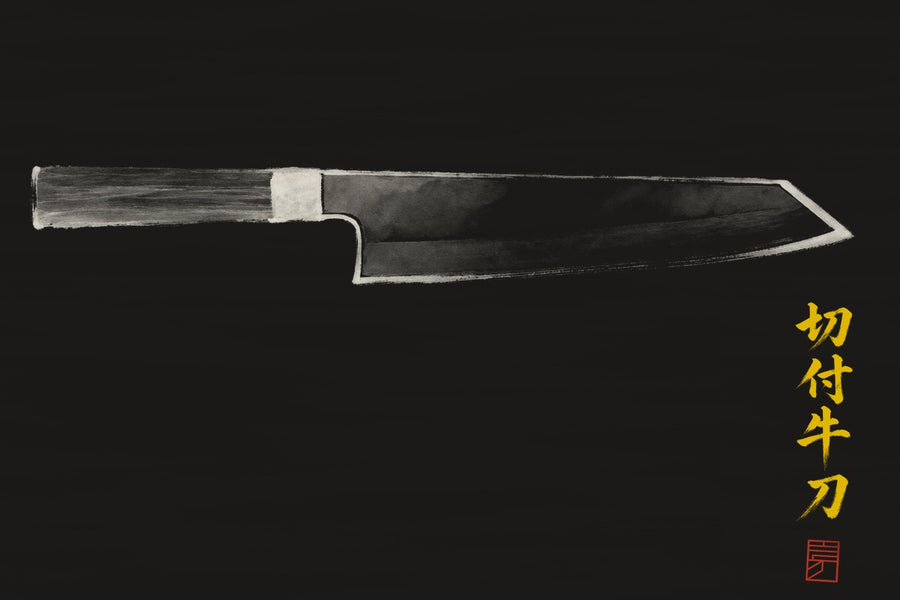
Is a K-tip Gyuto the same as a traditional Kiritsuke?

Not quite - and it is the single most common point of confusion when people shop for a kiritsuke. The two knives share the same striking angled, reverse-tanto tip, but underneath that tip they are very different tools.

A K-tip gyuto is normally a double-bevel knife: it is ground on both sides like any Western-style chef's knife, so it is forgiving to use, and sharpened exactly the way you would sharpen a normal gyuto. You get the dramatic kiritsuke look with the everyday usability of an all-purpose chef's knife.

A traditional kiritsuke, including the kiritsuke-yanagiba (slicer), is a single-bevel knife, ground on one side only. It is historically a master chef's knife: it takes real practice to use well, is set up for right-handed users by default, and needs single-bevel sharpening technique to maintain.

So if you want the kiritsuke silhouette with no learning curve, choose a K-tip gyuto. If you specifically want the traditional single-bevel discipline - and the precision it allows on fish and vegetables - choose a true kiritsuke. At Knives and Stones we stock both, and each product page tells you which construction you are looking at.

Is it Sukenari or 佑成?

Sukenari's own site carries both names together, titled the official site of 株式会社スケナリ with 佑成 named as a registered trademark. 佑成 is the house mark that appears on the blades.

So one house answers to both names: Sukenari is the company, 株式会社スケナリ, working from Fuchu machi in Toyama City, and 佑成 is its mark on the steel.

Are Sukenari knives handmade?

Yes. Sukenari says its knives are made by craftsmen by hand, one at a time, at its workshop in Fuchu machi, Toyama City.

The Sukenari lines we stock carry the workshop name in their titles.

What does the Sukenari mark 佑成 mean?

The workshop says the 佑 of its registered mark 佑成 (read Sukenari) is written with the person radical and 右, right, and that the character carries the wish for its tools to become the cook's indispensable right arm.

The company's own site title reads 登録商標 佑成 (registered trademark), and 佑成 is the house mark on its blades.

Are Sukenari knives worth it?

We think so. Sukenari, founded in 1933, makes professional kitchen knives in Toyama; a 2016 profile by TONIO, Toyama's industry support body, says it makes its knives start to finish under one roof. The same profile credits it with honyaki in White 1, a steel it says only a handful of Japanese makers can handle, and with forging trials for ZDP-189.

When we visited in August 2026, Sukenari told us its new smiths still learn honyaki first, as the foundation of the craft.

We list Sukenari knives in ZDP-189, ZDP-247, SG2, VG XEOS, Blue 2 and White 2, including single-bevel yanagiba, deba and usuba, and an SG2 honyaki yanagiba. Stock changes, so check each listing. The Sukenari maker page has more on the workshop.

How can I tell sanmai, warikomi, damascus and honyaki apart?

Start with the line on the blade. On a clad knife, sanmai or warikomi, a hard steel core is joined to a softer cladding, and the join shows on the bevel. Tojiro says this is where the name kasumi (霞, haze) comes from: the hard steel takes a shine while the soft metal looks hazy.

A honyaki (本焼) is made of one steel. Before hardening the smith coats the parts that should stay softer with clay, so only the edge hardens fully, and the boundary can show as a hamon (刃文).

Damascus is a pattern made by forging many layers of different metals together and then bringing the pattern out with the finish. If it matters how a knife is built, ask before you buy. Our sanmai, warikomi and honyaki pages show each construction.