Drag to spin · pinch or scroll to zoom

Sukenari  |  SKU: SUKE_ZDP247DA_SU240

Sukenari ZDP-247 Damascus Sujihiki 240mm, Ebony Handle

Sale price $812.00 Regular price $954.00

Pickup in Australia only

In Stock Now

Availability

Goes well with

Detailed Specifications
Line Sukenari ZDP-247 Damascus
Profile Sujihiki / Slicing knife
Bevel Type Double Bevel
Weight 156 g | 5.5 oz
Edge Length 233 mm | 9 11/64″
Heel Height 33 mm | 1 19/64″
Width @ Heel 2.2 mm | 3/32″
Width @ Mid 1.8 mm | 5/64″
Width @ 1cm from Tip 1.0 mm | 3/64″
Steel ZDP-247 | Powdered | Stainless
Blade Construction Sanmai - Stainless Damascus Clad
Typical hardness 63 to 64 HRC
Surface Finish Mirror Polish
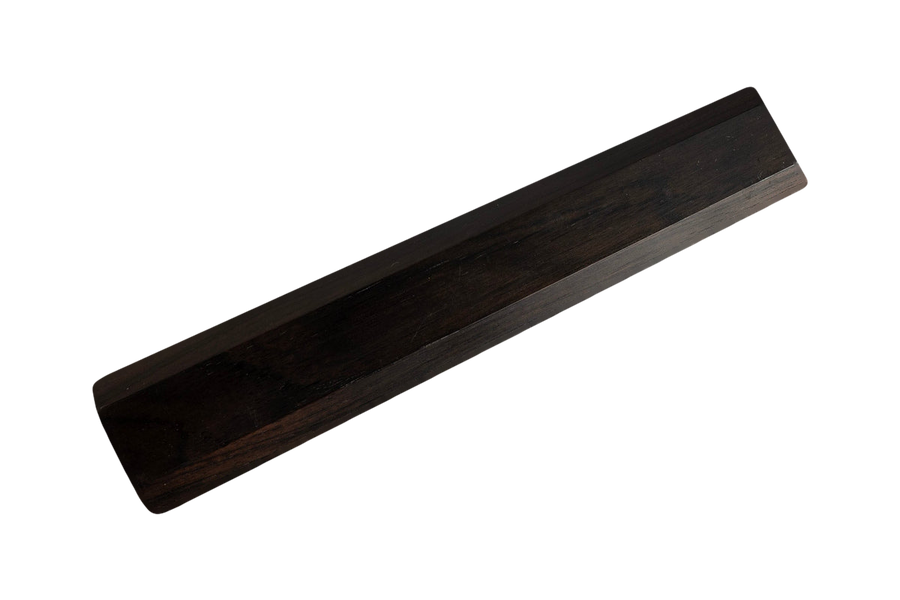
Handle Octagonal Ebony
Region Toyama
Best for
  • Collectors
  • Enthusiasts

World-wide shipping via DHL Express, 3 to 6 days (not available in the UK).


Every few years Sukenari works a steel nobody else has bothered with. ZDP-189, HAP40, SRS-13, YXR7, and now ZDP-247. It is not a new alloy. It comes from the same Hitachi (now Proterial) ZDP family as ZDP-189. Murray Carter was working a ZDP-247 variant back in the early 2000s, and described it as a steel made for forging rather than grinding from a blank. The steel came out of Hitachi about thirty years ago, and Sanyo Riki, the mill that laminates Sukenari's billets, says roughly a ton of it is left. What is new is a production kitchen series, which Sukenari debuted in August 2026. As far as we can tell, we are one of the first shops anywhere to sell commercially available ZDP-247 kitchen knives from a reputable maker, and possibly the first.

Now the honest part. Sanyo Riki calls ZDP-247 a development grade, and the only thing we have been told about it is one line: powder stainless, heat-treat it like SRS-13. Proterial has never published a specification at all. So we cannot give you a carbon or chromium figure, because nobody outside Proterial has one.

What we can give you is how it cuts. Sukenari takes it to 63 to 64 HRC, a touch under where they run ZDP-189. It is a hard powder steel and it holds an edge like one: a long plateau, then a clear signal that it wants the stones. The surprise came on the stones themselves. We put the 247 and the 189 on the same ones, and the 247 gives up a burr without the fight. It still rewards a good stone. It is stainless on paper. So is ZDP-189, and that still spots if you leave it wet. Wipe it, keep it dry, and do not twist it through bone.

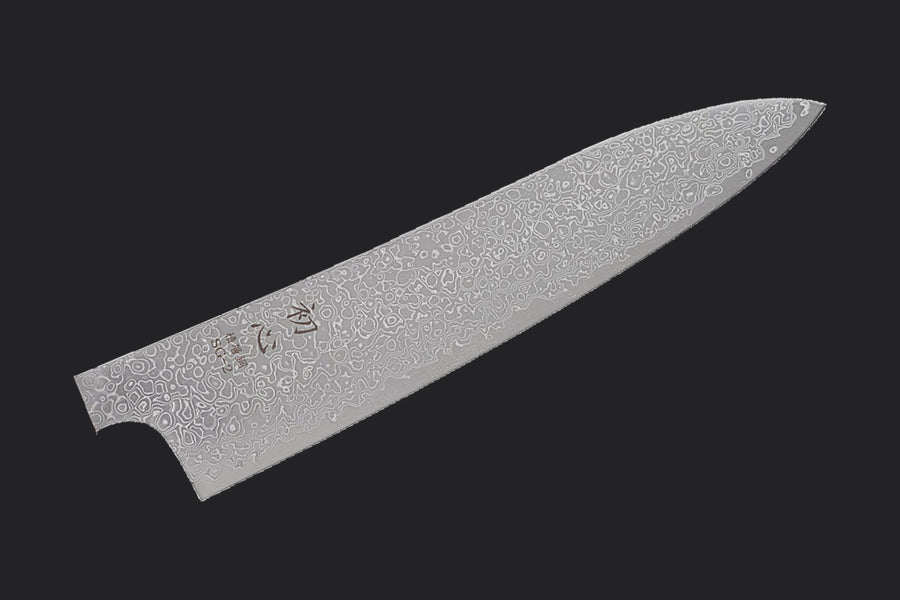
This is the Damascus: the same ZDP-247 core, clad in stainless damascus and mirror polished the way Sukenari finishes its ZDP-189 Mirror Damascus. The cladding is there for the eye, not the edge. The core does the cutting, and a mirror polish asks for more care to keep it looking new. If the ZDP-189 Mirror Damascus is the Sukenari you always wanted, this is that knife in the rarer steel.

Pros Cons
  • Highly collectable
  • Great artistic
  • Excellent performance
  • Need extra care
  • Mirror polish can be hard to maintain
  • High budget
Care Instruction
  1. Don't cut hard things! Japanese knives are brittle so bone hacking is a NO NO!
  2. Wash with neutral detergent after use, and wipe dry;
  3. Please don't wash knife with dishwasher, it will damage the wood handle;
  4. Be careful not to leave the knife close to a heat source for a long time;
  5. It is a lot more dangerous to cut with a blunt knife than a sharp knife!
  6. It is best to sharpen a Japanese knife regularly on a waterstone.

Sukenari

Sukenari, professional kitchen knives from Toyama

Sukenari Co. makes, sells and repairs professional kitchen knives in Fuchu-machi, Toyama City, under the registered mark 佑成. The company was founded in 1933.

The company's own greeting page explains the mark: its first character is written with the person radical and 右, meaning right, and carries the wish that these knives can become the cook's indispensable right arm.

Read more

A 2016 profile by TONIO, Toyama's industry support body, says the founder trained at an old-established Tokyo knife maker and opened the shop in his home region in November 1945, after a wartime evacuation there. Knife regions split forging, sharpening and handle fitting between specialists; that profile says Sukenari makes its knives start to finish under one roof, as that Tokyo house did. Its own site says craftsmen still make every stage by hand, one knife at a time.

The same profile credits Sukenari with honyaki in White 1, a very hard steel that is hard to work and that, it says, only a handful of makers in Japan can handle. It also describes know-how built for ZDP189, harder than White 1, and TONIO-backed forging trials, with metallurgy and measured heat treatment, that led to its ZDP189 wa-gyuto. The profile also tells of OEM work for other professional knife makers and wholesalers since the 2008 downturn. We first visited in April 2016, when Nobuo Hanaki, then president, showed us the forging.

On our August 2026 visit, Sukenari told us the family were originally honyaki smiths for Masamoto, so in the early days they made only honyaki. New smiths there still learn honyaki first, as the foundation of the craft. As they put it, most workshops do it the other way round.

We list ZDP-189 hairline gyuto, K-tip gyuto and santoku; ZDP-247 hairline or Damascus gyuto, K-tip gyuto, santoku and sujihiki; SG2 hairline or Damascus gyuto, K-tip gyuto, gyu-hiki and santoku; HAP40 slim K-tip gyuto and mirror polished yanagiba; VG XEOS Damascus gyuto; VG10 Damascus yanagiba; YXR7 petty; Aogami Super hairline gyu-hiki; Blue 2 deba, K-tip yanagiba and Kanto usuba; White 2 K-tip kiritsuke and K-tip yanagiba. We also list an SG2 honyaki yanagiba, including a K-tip, an SG2 nimai (two-layer) sakimaru takobiki, and VG XEOS nimai yanagiba and kiritsuke yanagiba.

“A Toyama maker of professional kitchen knives since 1933.”

Est. 1933 | 昭和8年
Known for Knives made start to finish under one roof
Website sukenari.jp Instagram @sukenari_official Read more about Sukenari

Sukenari · Toyama

Knife details

Frequently asked questions

What size sujihiki should I buy?

Between 210 and 270 mm, depending on where it will work. One Japanese maker lists 210 to 240 mm, double-bevel, for home use and 240 to 270 mm, single- or double-bevel, for professional kitchens.

Another, in Sakai, recommends 240 mm at home, with the size of your board in mind, and 270 mm for professional use.

Sujihiki or yanagiba: which do I need?

Most home cooks need the sujihiki. Choose the yanagiba when slicing raw fish for sashimi and sushi is the main job and you are prepared to learn single bevel sharpening.

A sujihiki is a long, narrow, double bevel slicer. Tojiro describes it as the knife for dividing large pieces of meat, known abroad as a slicer or carving knife, and says its length lets it cut sashimi as well. It carves roasts, trims sinew and portions fish, works in either hand and sharpens like any double bevel knife. Sujihiki run from about 210 to 300 mm, and 240 mm suits most home boards.

A yanagiba is the single bevel sashimi knife. It is ground on one side with a hollow back, and each slice is one long pull from heel to tip, so raw fish is cut cleanly rather than sawn. The edge is too fine for bones or anything hard. It is made for one hand and most are right handed, so check the listing if you are left handed. Sharpening means working the whole bevel and keeping the back flat. Yanagiba run from about 240 to 330 mm, with 270 and 300 mm the common sizes.

So for roasts, portioning meat and the occasional side of fish, buy a sujihiki. For regular sashimi and sushi work, buy a yanagiba and keep it for fish.

Which knife do I need for sushi and sashimi at home?

For occasional sushi at home, a sharp sujihiki (筋引) does the job. Tojiro describes it as a long, double-bevel slicer that can also be used for sashimi, and a double bevel works in either hand.

If sashimi is the point of the meal, choose a yanagiba (柳刃). Tojiro calls it the Kansai-style sashimi knife, now used across Japan, and it slices in one long pull from heel to tip. It is single bevel, so buy the one made for your hand.

If you start from whole fish, add a deba (出刃). Tojiro describes it as very thick and heavy, made for breaking fish down. The deba takes the fish apart and the slicer then cuts the fillets.

Is it Sukenari or 佑成?

Sukenari's own site carries both names together, titled the official site of 株式会社スケナリ with 佑成 named as a registered trademark. 佑成 is the house mark that appears on the blades.

So one house answers to both names: Sukenari is the company, 株式会社スケナリ, working from Fuchu machi in Toyama City, and 佑成 is its mark on the steel.

Are Sukenari knives handmade?

Yes. Sukenari says its knives are made by craftsmen by hand, one at a time, at its workshop in Fuchu machi, Toyama City.

The Sukenari lines we stock carry the workshop name in their titles.

What does the Sukenari mark 佑成 mean?

The workshop says the 佑 of its registered mark 佑成 (read Sukenari) is written with the person radical and 右, right, and that the character carries the wish for its tools to become the cook's indispensable right arm.

The company's own site title reads 登録商標 佑成 (registered trademark), and 佑成 is the house mark on its blades.

Are Sukenari knives worth it?

We think so. Sukenari, founded in 1933, makes professional kitchen knives in Toyama; a 2016 profile by TONIO, Toyama's industry support body, says it makes its knives start to finish under one roof. The same profile credits it with honyaki in White 1, a steel it says only a handful of Japanese makers can handle, and with forging trials for ZDP-189.

When we visited in August 2026, Sukenari told us its new smiths still learn honyaki first, as the foundation of the craft.

We list Sukenari knives in ZDP-189, ZDP-247, SG2, VG XEOS, Blue 2 and White 2, including single-bevel yanagiba, deba and usuba, and an SG2 honyaki yanagiba. Stock changes, so check each listing. The Sukenari maker page has more on the workshop.

Are Damascus knives worth it, or is it just looks?

On nearly every Japanese kitchen knife sold as Damascus, the pattern is there for looks. It sits in the soft cladding on the sides of the blade, and the plain core steel at the edge does the cutting. Pay more for Damascus if you enjoy how it looks, and for no other reason.

Most are built in three layers (sanmai): a hard core with a softer layer forge-welded to each side. On a Damascus knife that outer layer is itself made of many thin layers, etched or blasted so the pattern shows. The cladding is made separately from the core, so a maker can change the look without changing how the blade cuts. Two knives with the same core steel and the same grind perform the same, patterned or plain.

The cladding does real work, but plain cladding does it too. It supports the hard, brittle core, and when it is stainless it shields a carbon steel core from rust except at the edge. Our Damascus construction page shows the layers.

The pattern also changes with use. The contrast fades where you sharpen, and once the knife is thinned the cladding near the edge will not look as it did out of the box. If the budget is tight, spend it on the core steel and grind, or on a whetstone. If you like the pattern, buy it; wanting a good-looking knife is a fair reason to choose one.